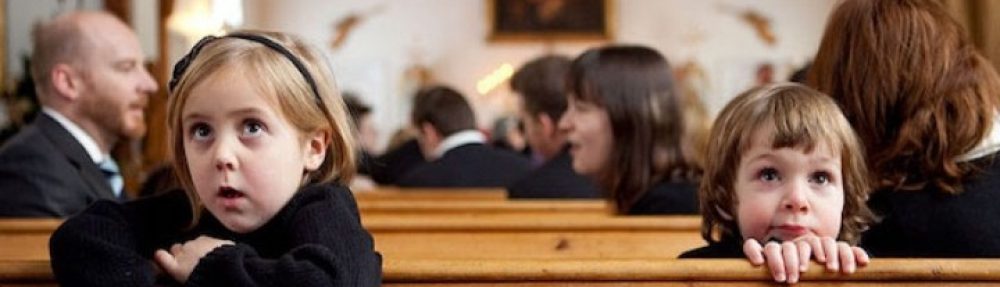
Sibling rivalry is nowhere more fierce than at Church. We contend over theology and the color of the carpet with equal intensity. But to love our brothers is a work of God’s sanctifying free grace. And a work we are all commanded to engage. Join us as we examine John 3:11-18 and consider what this commandment to love one another as Christians entails.
Category Archives: Uncategorized
07/5/2026 | “Practicing Righteousness” | 1 John 3:4-10
A believers’ assurance is not marked by sinless perfection but by practicing righteousness. One who has little concern over their sin shows contempt, not love, for the one who came to take away sin and to destroy the works of the devil. Join us this week as we examine 1 John 3:4-18 and consider the difference between practicing righteousness and practicing lawlessness.
06/28/2026 | “Plowing in Hope” | 1 John 2:28-3:3
Christians live out assurance by plowing in hope. No matter what struggles, adversities, doubts, or sin beset us, assurance is rooted not in our own strength, but in the “blessed hope, the appearing of the glory of our great God and Savior Jesus Christ.” Join us as we examine 1 John 2:28-3:3 and consider the blessed hope that animates our assurance of faith.
06/07/2026 | “The Name of God, Part 1” | Psalm 29, Matthew 6:5-15
God’s name is more than just what we call Him. The names of God in Scripture reflect who He is and what He does. The Biblical names of God reveal His attributes and teach us how we are to praise Him and what we are to expect of Him. We are encouraged to hallow His name and not take it in vain. Our confession reminds us that His name is any way in which He makes Himself known to us. Join us as Rev. Bill Holiman leads us to examine Psalm 29 and Matthew 6:5-15 and consider the significance of God’s name.
06/21/2026 | “The Name of God, Part 2” | Dt 32:1-14, Rev 15
God’s name is more than just what we call Him. The names of God in Scripture reflect who He is and what He does. The Biblical names of God reveal His attributes and teach us how we are to praise Him and what we are to expect of Him. Our confession reminds us that His name is any way in which He makes Himself known to us. Join us as Rev. Bill Holiman leads us to examine Deuteronomy 32:1-14 and Revelation 15 and consider the different expressions of God’s name.
05/31/2026 | “Presumption and Assurance” | 1 John 2:15-17
Presumption and assurance may look and act alike, but they are very different. Assurance is vigilant, wary of threats, within and without. While presumption thinks itself bullet-proof, invincible. Assurance welcomes warnings. Presumption plows ahead. Join us as we examine 1 John 2:15-17 and consider John’s warning not to love the world and how that warning impacts our assurance.
Dealing with Spiritual Anxiety
We all have it. Even those that have it all have it too. Everyone has anxiety. Especially those we think should not have it. We think we can make it go away by resolving the dilemma at its root. But we never seem quite able to root it out. King Solomon had it all from the world’s standards; riches, relationships, hobbies, success in his work, wisdom. You name it, he had it, but there was still a nagging anxiety regarding purpose and permanence that kept him awake at night.
As an aging Solomon reflected on his accomplishments, he wrote in melancholy terms,
Vanity of vanities, says the Preacher,
vanity of vanities! All is vanity.
What does man gain by all the toil
at which he toils under the sun?And even more shocking and angsty.
Sorrow is better than laughter,
for by sadness of face the heart is made glad.
The heart of the wise is in the house of mourning,
but the heart of fools is in the house of mirth.
For all Solomon had, he still struggled with anxiety. The ultimate anxiety. What does life come to? Where is its purpose and permanence? What will it all amount to when it comes to its end? Is there life after death? And what will it look like? How will I ever explain my life and choices to a Holy Judge? Solomon knew that nothing brought deep reflection and surfaced anxiety like sorrow and “the house of mourning.”
How do I stand before God? Have I believed enough? Done enough? Been enough? Loved enough? Grace, for all its gifts, sometimes makes us anxious. It seems too free, too easy, too… gracious. We know that the answers to all the questions above would always be ‘No.’ We will never believe, do, be, love enough to merit God’s favor apart from the work of the Spirit working faith in Christ in our heart. But still, we are unsure if we are safe and sure in Christ.
The antichrists in the Apostle John’s Day said, “don’t sweat it.” Live your life however you want. Don’t worry too much about Jesus, after all he was just a teacher and example, nothing more. You can know God through secret knowledge not through faith in Christ as taught by the Prophets and Apostles. But those tempted by such false teaching found no assurance in it but also struggled with assurance as true followers of Christ.
So John writes to them to believe in the person and work of Christ as taught by the Apostles and to love one another as Christ has loved each of them. But what if they have not believed enough? Or loved enough? What if they have fallen short in those things which are marks of Chrisitan assurance? What relief is there from this anxiety? How do I find assurance in the face of my doubts about myself and my faith?
Join us as we examine 1 John 3:19-24 and consider John’s comforting words to those struggling with doubt. We meet on the square in Pottsville, right next to historic Potts’ Inn at 10:30 am for worship. Get directions here or contact us for more info. Or join our livestream on YouTube.
Brother’s Keeper
To the outside world they may look alike, act alike and appear to think alike. But nothing exhibits more diversity than siblings. From the moment they are born they strive for diversity from their older brothers and sisters. Whether it is due to birth order, family dynamics, personality convergence or divergence, or simply the Lord’s delight in all things different, there is nothing more diverse than a family.
G. K. Chesterton, in his book Heretics, describes well the largeness of the diversity that exists within the family. It is in that small village where large living is to be found. It is a large quote, but worthy of your time and consideration.
It is not fashionable to say much nowadays of the advantages of the small community. We are told that we must go in for large empires and large ideas. There is one advantage, however, in the small state, the city, or the village, which only the willfully blind can overlook. The man who lives in a small community lives in a much larger world. He knows much more of the fierce varieties and uncompromising divergences of men.
The reason is obvious. In a large community we can choose our companions. In a small community our companions are chosen for us. Thus in all extensive and highly civilized societies groups come into existence founded upon what is called sympathy, and shut out the real world more sharply than the gates of a monastery.
There is nothing really narrow about the clan; the thing which is really narrow is the clique. The men of the clan live together because they all wear the same tartan or are all descended from the same sacred cow; but in their souls, by the divine luck of things, there will always be more colours than in any tartan.
But the men of the clique live together because they have the same kind of soul, and their narrowness is a narrowness of spiritual coherence and contentment, like that which exists in hell. A big society exists in order to form cliques. A big society is a society for the promotion of narrowness. It is a machinery for the purpose of guarding the solitary and sensitive individual from all experience of the bitter and bracing human compromises. It is, in the most literal sense of the words, a society for the prevention of Christian knowledge.
-G. K. Chesterton, Heretics, XIV. On Certain Modern Writers and the Institution of the Family.
We hear of sibling rivalry and that is easy to understand. That competition for attention or the last piece of cake is fierce and persistent. The need to be heard, seen, and known among the clamor of the family is a very real thing. Sibling rivalry falls naturally out of our sinful pursuit of the ‘me’ rather than the ‘us.’ But sibling love and sibling loyalty is something quite divine. In the tumult of family conflict, the cultivation of love for one another causes the family to truly become a society for the promotion of Christian knowledge.
The Church is such a family. Made up of the chosen not the chooser. For Jesus taught,
You did not choose me, but I chose you and appointed you that you should go and bear fruit and that your fruit should abide, so that whatever you ask the Father in my name, he may give it to you. -John 15:16
And Paul noted that “God arranged the members in the body, each one of them, as he chose.” (1 Cor. 12:18)
The Church is the ultimate family. To a critical, hostile world Christians all look alike, act alike, and appear to think alike. But we know by experience, this is hardly the truth. Sibling rivalry is nowhere more fierce than at Church. We contend over important theological truths and the color of the carpet with equal intensity. Like calves at the feeding trough, we are apt to jostle and push for position and preference, sinfully pursue the ‘me’ rather than the ‘us.’
But nothing reveals our identity as disciples and believers like our love for one another. Jesus declared,
A new commandment I give to you, that you love one another: just as I have loved you, you also are to love one another. By this all people will know that you are my disciples, if you have love for one another.” -John 13:34-35
Notice that Jesus commands love. Rivalry and self-serving come naturally. Our new nature as believers enables us to love, but to love our brothers and sisters who are so different from us, act so differently, think so differently, and prefer things so different from us. That is a work of God’s sanctifying free grace.
As John writes to his beloved flock in Asia Minor to show them how to grow in their assurance of the faith they profess, he points to their love for one another as a non-negotiable. False teachers, the Antichrists, were wreaking havoc in the church by denying the person and work of Christ, rejecting the apostolic authority of the scriptures and encouraging an individualistic Christianity that calls men out of fellowship in the church. But John reminds the flock that God has called them to abide in Christ and in the Church and to love one another.
Join us as we examine John 3:11-18 and consider what this commandment to love one another as Christians entails. We meet on the square in Pottsville, right next to historic Potts’ Inn at 10:30 am for worship. Get directions here or contact us for more info. Or join our livestream on YouTube.
Practicing Righteousness
We all know that “practice makes perfect.” But how many of us know what makes perfect practice? Too often practice can turn into simply goofing around, or improvising with our favorite piece, or focusing only on what we already do well. But perfect practice involves focusing on the fundamentals, endless repetition to improve motor memory, drilling on the things we do poorly, and slowing everything down, all the while keeping tempo by counting.
Perfect practice involves immense intentionality, commitment, and hard work to shape a goal into a way of life. This is true for specific talents or skills, as well as for habits or lifestyles. Development in any of these areas requires practice. And this is no less true for our spiritual lives. While our sanctification is a work of God’s grace that provides a continual supply of strength from the Holy Spirit, it is a work that involves the diligent use of the outward and ordinary means of grace on the part of the believer.
The young churches in Asia Minor had been disturbed by false teachers and antichrists who introduced a false gospel that claims peace with God while living worldly lives. And so, the Apostle John writes to them to point back to the person and work of Christ, to the sanctifying, transformative work of the gospel in their lives, and their love for one another as indicators for authentic faith and fellowship.
John notes, however, that abiding in Christ involves to practicing righteousness while carefully guarding against practicing sin. While John acknowledges that sin, repentance, and confession are part of the Christian life, he also points out that one who makes a habit of practicing sin is not born again. In no uncertain terms John encourages assurance through the practice of righteousness while guarding against practicing sin, as he writes.
Whoever makes a practice of sinning is of the devil, for the devil has been sinning from the beginning. The reason the Son of God appeared was to destroy the works of the devil. No one born of God makes a practice of sinning, for God’s seed abides in him; and he cannot keep on sinning, because he has been born of God. By this it is evident who are the children of God, and who are the children of the devil: whoever does not practice righteousness is not of God, nor is the one who does not love his brother. – 1 John 3:7-10
John is not advocating sinless perfection as the basis of Christian assurance, but he is pointing out that the believer is marked by practicing righteousness and not sin as a way of life. The one who claims to be a believer but has little concern over their sin shows little regard for the one who came to take away sin and to destroy the works of the devil. The true believer delights in the works of Christ and cherishes them. John reminds believers that “whoever practices righteousness is righteous as He is righteous.”
Join us this week as we examine 1 John 3:4-11 and consider the difference between practicing righteousness and practicing lawlessness. We meet on the square in Pottsville, right next to historic Potts’ Inn at 10:30 am for worship. Get directions here or contact us for more info. Or join our livestream on YouTube.
Plowing in Hope
A pundit once noted, “as long as there is farming, there is legalized gambling.” Farming demands an irrepressible hope. Pests, weeds, rain when you don’t want it and drought when you do are all part of farm life. And while “nothing runs like a Deere” sometimes the Deere stops running at all. The adversities of farm life are well known and incalculable, yet the farmer maintains hope that at the end of the season the Lord will provide a crop.
Likewise, the Christian should live out his assurance by plowing in hope. No matter what struggles, adversities, doubts, or sin beset us, our assurance and our perseverance is rooted not in our own spiritual strength, but in God’s promise that if we “hold fast to the confession of our hope without wavering, … he who promised is faithful. For indeed, “he who began a good work in you will bring it to completion at the day of Jesus Christ. Paul commands us in 1 Corinthians 9:10 that “plowman should plow in hope and the thresher thresh in hope of sharing in the crop.” Are you plowing in hope?
Before the days of GPS, in order to plow a straight row, a farmer found a mark at the end of the field and maintained aim toward that mark. The Christian must do the same, plowing in hope toward the “day of Jesus Christ.” The Christian life is a life lived in expectation of the coming of our Savior.
As a boy, growing up under the looming threat of nuclear war with every installment of the evening news, sermons about the return of Christ were all framed in fear. Beasts and antichrists weighed heavily. Judgement seats and open books brought fear. Our youth choir sang songs like, “I wish we’d all been ready.” And signs on the interstate warned truckers and travelers, “Prepare to meet thy God.”
But the Bible exhorts us to long for the return of Christ, the Resurrection and the New Heavens and the New Earth. Titus 2 frames our Christian lives in the here and now with the there and then, referring to Christ’s coming as the “blessed hope.”
For the grace of God has appeared, bringing salvation for all people, training us to renounce ungodliness and worldly passions, and to live self-controlled, upright, and godly lives in the present age, waiting for our blessed hope, the appearing of the glory of our great God and Savior Jesus Christ, who gave himself for us to redeem us from all lawlessness and to purify for himself a people for his own possession who are zealous for good works. Titus 2:11-14
Luke 21:28 reminds us that even when the worlds seems to be coming apart we are to “straighten up and raise [our] heads, because our redemption is drawing near.” And the final words of Scripture teach us to long for this blessed hope and in response to Jesus’ promise, “Surely I am coming soon” to say, “Come Lord Jesus!”
Nothing strengthens our assurance of faith like holding fast to the hope of Jesus’ return. And so, as the Apostle John writes to the churches of Asia Minor to refute the false teachers and antichrists, he exhorts his ‘little children’ to press their fingertips and noses to the glass of time and eagerly hope in the return of their Savior.
Years ago, the group NewSong pictured this poignantly in their song, Fingertips and Noses about a teacher teaching her young students about Jesus’ return. That song ends with an important refrain.
Where will Jesus find us when He comes again?
Will we be like little children waiting just for Him?
With our fingertips and noses pressed to the windowpanes
Longing eyes, expectant hearts for Him to come again.
Where will Jesus find us when He comes again? With longing eyes, expectant hearts for Him to come again? Some of the Bible’s most enigmatic and distressing passages are framed by instructions to believers to watch, wait and live expectantly, longing for Christ’s return. Our mantra is to be maranatha or ‘Come, Lord Jesus.’ Is that your mantra? Can you say with the Spirit and the Bride, ‘Come!’ Or is your cry, “not yet!”
How eager are you for the return of Christ? How convinced are you that the day of His return will be the very best day, not a day of disaster? Will the climax of your life be the “blessed hope, the appearing of the glory of our great God and Savior Jesus Christ, who gave himself for us?”
Join us as we examine 1 John 2:28-3:3 and consider the blessed hope that animates our assurance of faith. We meet on the square in Pottsville, right next to historic Potts’ Inn at 10:30 am for worship. Get directions here or contact us for more info. Or join our livestream on YouTube.

