Fingertips and Noses

Eyeglasses are gamechangers.   They are so common we cannot imagine growing older without them.   Demographers report that three fourths of all Americans wear corrective lenses.  Without them reading would be impossible for me.  And my driving would be more hazardous than it already is.   But for all their benefits, wearing glasses has challenges.

First, they are remarkably hard to find, especially when they are on my head.   And of all the things I drop, they seem more drawn to the effects of gravity.  No matter what bridge-rest I install, my glasses inevitably come to rest at the end of my nose, librarian style.  And, most notably, they are impossible to keep clean. 

My beloved wife plants glass cleaner and lens cloths in every nook and cranny of my life.   Yet my glasses always look like I’ve been cooking French fries then banging out erasers.   If you doubt the air is heavily polluted, you are in the one fourth of Americans that don’t wear glasses.   Of course, all glass is a dirt magnet.   Its transparency tells all, readily revealing every streak, speck, and smudge.

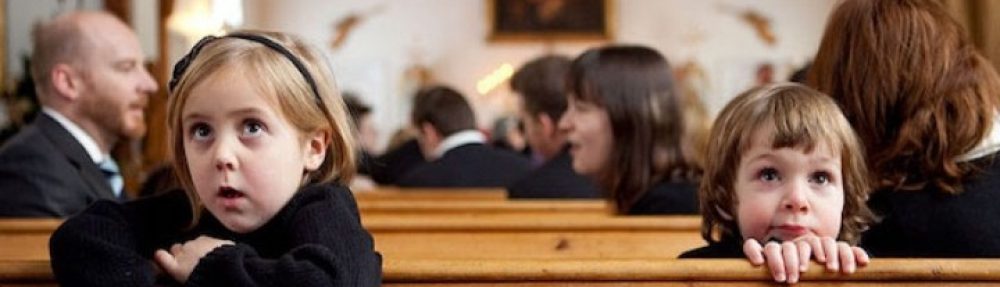
But if there are small children in your home the transparency of glass reveals something else – expectation.   While the phrase, “wait till your father gets home” can inspire fear, it more often inspires delight.   Any family with a glass door or large picture window will find it covered in smudges from fingertips and noses.   Children, expectantly waiting for the return of fathers and mothers, press against the glass with hands and faces.  Filling the space with the telltale signs of longing for the return of a loved one.

No doubt, I am not the first to notice this.   Or make the analogy, that our lives as believers should, in the same way, transparently offer telltale signs of the longing for the return of our Beloved One, the Lord Jesus.   Years ago, NewSong pictured this poignantly in their song, Fingertips and Noses.

Up in the hills somewhere in Kentucky
In a little old school way back in the nothing
Where special kids born with special needs
Are sent to learn life’s ABCs

Their teacher, Mrs. Jones, tells them all about Jesus
How in the twinkling of an eye He’s coming back to get us
About streets of gold and pearly gates
How they want to go, they just can’t wait
And she can’t keep them in their seats
They’re all at the windows straining to see

And it’s fingertips and noses pressed to the windowpanes
Longing eyes, expectant hearts for Him to come again
All they know is that they love Him so
And if He said He’d come, He’s coming
And they can’t keep their windows clean
For fingertips and noses

She tried to explain to the kids about His coming
She tried to calm them down, but they just wouldn’t listen
They just giggled and they clapped their hands
They’re so excited that He’s coming for them
And the first thing you know they’re out of their seats
Back at the windows straining to see

Where will Jesus find us when He comes again?
Will we be like little children waiting just for Him?
With our fingertips and noses pressed to the windowpanes
Longing eyes, expectant hearts for Him to come again.

Where will Jesus find us when He comes again?   With longing eyes, expectant hearts for Him to come again?   Some of the Bible’s most enigmatic and distressing passages are framed by instructions to believers to watch, wait and live expectantly, longing for Christ’s return.  Our mantra is to be maranatha or ‘Come, Lord Jesus.’   Is that your mantra?  Can you say with the Spirit and the Bride, ‘Come!’  Or is your cry, “not yet!”  

How eager are you for the return of Christ?  How convinced are you that the day of His return will be the very best day, not a day of disaster?   Will the climax of your life be the “blessed hope, the appearing of the glory of our great God and Savior Jesus Christ, who gave himself for us?”   

Join us this Lord’s Day, as we examine Mark 13:1-37 and consider how Jesus’ repeated command to “watch!” warns us to live expectantly and cultivate a longing for his return, training our hearts to cry, “Come, Lord Jesus.”  We meet Sundays at 10:30 am on the square in Pottsville, Arkansas right next to historic Potts’ Inn for worship.  Get directions here or contact us for more info.  Or join our livestream on YouTube

09/21/2025 | “Are We There Yet?” | Mark 12:28-37

“Not far from the kingdom” is not far enough. In Mark 12 a scribe acknowledged that wholehearted love for God was more than “all whole burnt offerings and sacrifices.” He was not far from the kingdom. But he was not there yet. What more was needed? Join us as we examine Mark 12:27-38 and consider Jesus’ answer to our question, “are we there yet?” on the journey of faith.

09/07/2025 | “Smokescreen” | Mark 12:13-17

We use smokescreens to obscure our thoughts and actions from others, thinking by artifice we can escape accountability to both men and God. But in a memorable discussion about taxes, Jesus warns us not to evade giving to God all that is rightly his. Join us as we examine Mark 12;13-17 and consider the call to render to God all that belongs to him.

Cheerful Giving

Birds and bees.  Spinach in our teeth.  A beloved’s new hairstyle. The duplicity of a close friend.  Ambitions that don’t line up with abilities and aptitudes.  The pain of hurtful comments.  A terminal diagnosis.  The “hospice talk.”   All these are awkward conversations. 

We struggle to navigate these uncomfortable conversations.  We avoid and evade the person to dodge the conversation.  Or subtly infer, imply, and insinuate, hoping our friend will understand what we are saying without actually saying it.  But this vacuum of clarity is almost always filled with imputed motives and a fiction bearing little resemblance to the awkward truth.  In the end we must usually resort to an uncomfortable bluntness.  Then work to pick up the relational debris awkward conversations inevitably create.

While the Bible instructs us to be open to constructive criticism, our natural defensiveness struggles to see the “constructive” part and feels only the weight of criticism.  We read, “Faithful are the wounds of a friend; profuse are the kisses of an enemy.”  But everyone likes kisses better than wounds.   

Pastors have lots of awkward conversations.  It is simply part and parcel of any vocational calling to care for others.  But the awkward conversations pastors often dread most are those related to “giving.”  Especially since in a small church, pastoral support is often the bulk of the budget.  Preaching on giving has often been confined to a very short series on ‘stewardship,’ which is our euphemism for giving.

The fact that we view the topic of giving, especially tithes and offerings, as an awkward conversation speaks volumes about a consumeristic view of the Christian life.  We tend to view the topic of ‘giving’ as an unpleasant but necessary part of the Christian life.  And so, we miss out on one of the most joyful aspects of covenant life and treat ‘giving’ as an embarrassment to our apologetic for a life well lived.

Along with “all Christians are hypocrites” the other darling mantra of skeptics is “all they want is your money.”  Without a proper view of the grace of giving, we cower apologetically at these slogans.  Thrown back on our heels, we treat the topic of giving as anathema and only refer to it tangentially, quick to translate ‘giving’ into convenient service not sacrificial gratitude.  

But the Bible is very clear that giving tithes and offerings is an indispensable part of our Christian life.  Indeed, “God loves a cheerful giver.”  By cheerful giving, we celebrate all the attributes of a giving God, his grace, his provision, his faithfulness and his goodness.   Our practice of giving is a powerful barometer of our delight in our God and faith in what we profess to believe about him.

No story in the gospels demonstrates more clarity on the topic of giving than the story of the ‘widow’s mite.’   But the point of the story is not the gift, but the giver.   At the end of Mark 12, after an exhausting day of controversy in which Jesus took on all comers from the Sanhedrin and brought them to silence time and time again, Jesus observes and remarks on a poor widow’s offering.

He sat down opposite the treasury and watched the people putting money into the offering box. Many rich people put in large sums. And a poor widow came and put in two small copper coins, which make a penny. And he called his disciples to him and said to them, “Truly, I say to you, this poor widow has put in more than all those who are contributing to the offering box. For they all contributed out of their abundance, but she out of her poverty has put in everything she had, all she had to live on.” -Mark 12:41-44

We know little about this widow’s circumstances.  She was probably lonely.  Perhaps she faced the challenges of older age.  Certainly, her life is one of financial instability and uncertainty.  But there is a secret delight in one who gives both of her last two copper coins to the One who has her heart and holds her life.  She is not reluctant.  She is not calculating.  She seeks no praise or sympathy.   Quietly, sacrificially, confidently, cheerfully she casts all she has into the collection, resting in the goodness and mercy of her God.

What is your attitude toward giving?  How do you feel when you put your gift into the plate, schedule an online payment or recurring bill pay?   Are you reluctant, calculating, begrudging?  Is there an economy of merit in your heart?  A keeping of accounts with God?  Or are you avoiding the emotional calculus of giving by simply not giving?   Lots of people gave on that Tuesday of Passion Week, but the poor widow is the cheerful giver that caught the Lord’s eye.  Not because of the size of her gift, but the size of her joy.

Join us as we examine Mark 12:38-44 and consider what it looks like to be a cheerful giver. We meet Sundays at 10:30 am on the square in Pottsville, Arkansas right next to historic Potts’ Inn for worship.  Get directions here or contact us for more info.  Or join our livestream on YouTube

09/14/2025 | “Stump the Teacher” | Mark 12:17-27

The Sadducees did not believe in life after death which is why they were “sad you see!” Even worse they didn’t believe the scriptures or the power of God to keep his Word. They trusted only their experience. Indeed, they were, “sad-you-sees.” Join us as we examine Mark 12:17-27 and consider where we must begin to unravel the questions that stump us.

Are We There Yet?

Excitement and endurance.  Those two words captured the ethos of Wheeler family vacations when I was a child.  Mama would wake us in the predawn hours while the rest of the world slept.  The world is so different at that hour.  So quiet, so expectant. Sleepily we stumbled into the Ford Galaxy 500 and fled the suburbs and the city before the traffic noticed we were going. 

My sisters immediately went back to sleep, but “Barry,” my faithful furry friend, and I remained vigilant.  Taking it all in.  Trying to savor every moment of our adventure.  The sunrise, the waking world, breakfast at Howard Johnson’s along the way were all heralds of adventure. But it did not take long for predawn excitement to give way to the test of endurance. 

Bill Wheeler clearly identified with the tortoise in Aesop’s famous fable.  Slow and steady wins the race!  Even before an energy crisis drove down speed limits, my dad drove 55.  He was never in a hurry.  He loved the ‘scenic’ route.  We were eager to see the ocean.  He intended to see everything along the way.  

He was s self-consciously slow driver, but he was also steady.  And by ‘steady’ I mean we never stopped.  Never!  Not for unscheduled bathroom breaks, not to stretch our legs, not even for a little carsickness.  Unless we needed the ER, on we rolled.   And as endurance unfolded into impatience a collective cry began to arise from the back seat, “Are we there yet?”  After all the soil had turned sandy.  Spanish moss began to appear in the trees.  We had counted all the Volkswagen Bugs.  And we could not find a word that began with ‘X’ on any billboard.  Surely, we were getting close!

Travel is a good metaphor for life.  Philosophers, muses, and inspired authors have all made this connection.  In the ancient language of the Old Testament the world “to walk” never simply means ‘pedestrian travel.’  It always conveys the idea of life’s journey.  And in Mark 12, in the midst of a grueling day of constant conflict between Jesus and the religious establishment, an honest inquirer emerges. From among the scribes comes a question not designed to ensnare but to ask directions for life’s most important journey. 

Mark reports the scribe’s question and response.

“Which commandment is the most important of all?” Jesus answered, “The most important is, ‘Hear, O Israel: The Lord our God, the Lord is one. And you shall love the Lord your God with all your heart and with all your soul and with all your mind and with all your strength.’ The second is this: ‘You shall love your neighbor as yourself.’ There is no other commandment greater than these.” And the scribe said to him, “You are right, Teacher. You have truly said that he is one, and there is no other besides him. And to love him with all the heart and with all the understanding and with all the strength, and to love one’s neighbor as oneself, is much more than all whole burnt offerings and sacrifices.” And when Jesus saw that he answered wisely, he said to him, “You are not far from the kingdom of God.” -Mark 12:28-34

We sometimes reflect positively on this passage.  At last, a scribe who is “not far from the kingdom of God!”  But then we realize, “wait! he has not arrived.” “Not far from the kingdom” is not “in the kingdom.”  It is not sufficient merely to understand that it is not rite and rubric but wholehearted love for God that saves.  Without grasping the person and work of Christ and experiencing the grace of God, the demand for wholehearted love of God becomes another impossible work and inevitable failure for fallen man, unaided by the regenerating work of the Spirit.

Jesus’ follows his answer to the scribe’s question with a question of his own.  A question whose answer provides the key to knowing and loving God wholeheartedly.  Jesus does not abandon this sincere scribe on the road, somewhere not far from the kingdom of God.  But graciously gives him the most important direction he needs to arrive at his destination.  Is your attempt to love God in every area of life a frustrated work?  Or a grateful response to the grace of God in Christ?

Join us as we examine Mark 12:27-38 and consider Jesus’ answer to our question, “are we there yet?” on the journey of faith.  We meet Sundays at 10:30 am on the square in Pottsville, Arkansas right next to historic Potts’ Inn for worship.  Get directions here or contact us for more info.  Or join our livestream on YouTube

Stump the Teacher

Subtlety, subterfuge, strategic delay, even simple arrogance.  Students love to “stump the teacher.”  With riddles, circular arguments, rabbit trails and incomprehensible jargon, students delight in bemusing the teacher.  Used as a delaying tactic to avoid an assignment, undermine authority, or just to enter into a battle of wits, rarely is an attempt to “stump the teacher” intended to gain insight, knowledge or wisdom.  It is almost always an attack on authority or an attempt to derail the agenda.

It is possible I was that student.  The one who delighted to gum up the works in the classroom and frazzle the teacher with questions designed as stumpers.  But by God’s gracious providence, many of my teachers were strategically and intellectually more than a match for my impertinence.  Dr. Jessica Hunt, my high school math teacher would see my “stumpers’ coming a mile away.  With German frankness and lightening wit, she easily deflected my attempts to hijack discussion, graciously but firmly putting me in my place.  And Ms. Constance Sandidge, my 11th grade English teacher would often say, “Howard Wheeler that is just nonsense!”

Language and intellect are God’s remarkable gifts to mankind, but in our fallenness, we often use them to sew together a flimsy verbal garment to shield us from shameful truths we don’t want to acknowledge.  One theologian noted regarding the Tower of Babel, that God confused the languages because through words we try to create an alternative reality to the one He created.  We adopt the mantras and memes of our time as the worldview that affirms us in our sinful choices and refuse to be challenged by the timeless truths of God’s Word. 

The Sadducees in the gospels are a perfect example of this.  Though wealthy, powerful, learned, and priestly, they preferred civil power to divine power, and contemporary opinions to timeless truth.  They rejected most of what the scriptures taught and, in fact, most of the OT scriptures as God’s Word.  They reduced the OT to the first five books of the Bible, disregarding the histories, the prophets, and the wisdom books as authoritative.  They rejected any belief in the immortality of the soul, angels, and the resurrection of the dead.  They rejected the promise of a Messiah.  They loved political power more than godliness, even though deeply connected to the priesthood and the sacrificial system. 

Jesus’ claims of authority threatened their place in society, their influence, and their affluence.   In John 11:25, Caiaphas, who was high priest during the last year of Jesus’ earthly life ironically declared, “do you [not] understand that it is better for you that one man should die for the people, not that the whole nation should perish.” 

While we rarely hear from the Sadducees, they, along with the Pharisees and the Sanhedrin, stand behind all the plots to silence Jesus.  And in Mark 12:17-27 they join the Pharisees, Herodians and scribes in the second of a series of three “stumper” questions.  Their aim is to embroil Jesus in either intellectual absurdity or a rejection the authority of scripture.  Either one of which will discredit him as a teacher and nullify his authority.  

And so, they present him with a straw-man scenario about seven brothers and a childless wife to mock the teaching about resurrection.  It was a famous theological riddle in Judaism that had long gone unanswered by those who taught a bodily resurrection.  Surely this would “stump the teacher” and derail his agenda.  But Jesus quickly spots that the problem is not in the puzzle but in the puzzlers.  The answer is really very simple. 

Jesus said to them, “Is this not the reason you are wrong, because you know neither the Scriptures nor the power of God? For when they rise from the dead, they neither marry nor are given in marriage, but are like angels in heaven. And as for the dead being raised, have you not read in the book of Moses, in the passage about the bush, how God spoke to him, saying, ‘I am the God of Abraham, and the God of Isaac, and the God of Jacob’? He is not God of the dead, but of the living. You are quite wrong.”

Life’s most puzzling problems have solutions rooted in the promises of God and in His power to keep them all.  Where are you looking for answers?  If you start in the wrong place you will surely end in the wrong place.  The Sadducees were smug and self-satisfied.  They sought no truth higher than their own experience and ignored the deeper realities of sin and redemption that consumed their daily lives in the ministry of the priesthood.  They had no hope beyond the things of this world and as Paul words aptly describe them,

For if the dead are not raised, not even Christ has been raised.  And if Christ has not been raised, your faith is futile and you are still in your sins. Then those also who have fallen asleep in Christ have perished. If in Christ we have hope in this life only, we are of all people most to be pitied.  1 Corinthians 15:16-19

Join us as we examine Mark 12:17-27 and consider where we must begin to unravel the questions that stump us.  We meet Sundays at 10:30 am on the square in Pottsville, Arkansas right next to historic Potts’ Inn for worship.  Get directions here or contact us for more info.  Or join our livestream on YouTube

Smokescreen

It did not begin with World War I, but that is when it got a name.  The term “smokescreen” was first used in 1915.  It referred to the intentional production of large volumes of smoke to screen the movement of troops, artillery, aircraft and even ships.  Smoke screens have been commonly created by small weapons such as a grenade or generated on a larger scale by tanks or warships.

Smokescreens were originally intended to hide tactical movement from an enemies’ line of sight, but in modern warfare the enemies’ line of sight extends to satellite, radar, and high-altitude surveillance.  As time and technology advanced the art of war, the meaning of the expression expanded, but the anachronistic word endured. 

These days, ‘smokescreen’ is used more in conversations than military contexts.  The dictionary defines it as “something designed to obscure, confuse, or mislead.”  When someone wants to direct attention away from their actions, words, or intentions, they act, speak, or express an intention that distracts from what they don’t want noticed.

Salesmen point us to their product’s amazing new features to keep us from asking hard questions about reliability and service.   Politicians trumpet popular mantras and vilify opponents’ dismal records or public failures to direct our gaze away from their own (in)abilities, record and positions.  And children deflect attention from the secretly eaten cookie or the broken vase by sudden, effusive recitations on the transgressions of a sibling.  Or a relentless battery of urgent, curious questions about how the world works.

We all do it. Throw up smokescreens to obscure, confuse, or mislead regarding our thoughts, words, and actions.  And while this may appear effective the reality is that voters, consumers, and parents see through the smoke.  Yet we persist in thinking through our clever artifice we can escape moral accountability to both men and God. 

Even the Bible is filled with attempts to shelter from God’s authority through smokescreens of shifted blame, accusations of God’s unfairness, fastidious but faithless worship, and pretentious theological inquiry.  When Jesus’ discussion with the woman at the well took a decidedly personal turn, she unleased a memorable smokescreen.

Jesus said to her, “Go, call your husband, and come here.” The woman answered him, “I have no husband.” Jesus said to her, “You are right in saying, ‘I have no husband’; for you have had five husbands, and the one you now have is not your husband. What you have said is true.” The woman said to him, “Sir, I perceive that you are a prophet. Our fathers worshiped on this mountain, but you say that in Jerusalem is the place where people ought to worship.”  John 4:16-20

And in Mark 12:13-17, one of Jesus’ most memorable sayings came in an attempt by the religious leaders to lure Jesus into a trap that would lead to either his rejection by the people or arrest by the Romans.

And they came and said to him, “Teacher, we know that you are true and do not care about anyone’s opinion. For you are not swayed by appearances, but truly teach the way of God. Is it lawful to pay taxes to Caesar, or not? Should we pay them, or should we not?” But, knowing their hypocrisy, he said to them, “Why put me to the test? Bring me a denarius and let me look at it.” And they brought one. And he said to them, “Whose likeness and inscription is this?” They said to him, “Caesar’s.” Jesus said to them, “Render to Caesar the things that are Caesar’s, and to God the things that are God’s.” Mark 12:13-17

Through a smokescreen of flattery, pretended adulation, and false theological inquiry they sought to conceal their own unbelief and entangle the Son of God in a Gordian Knot of controversy.  We see them as petty and pretentious, yet how often do we do the same thing?  Throwing up smokescreens of skepticism of God’s goodness, lip service in our discipleship, or irresolvable theological confusion to shelter in unrepentance and hide from the gracious Lordship of Christ. 

Even when we come to this passage, our focus is too often on the implications of Jesus’ answer regarding Caesar, and too little on what we are to render to God. More significant than Jesus’ teaching regarding our relationship and duty to the civil magistrate is the warning against evading love for God with all our heart, mind, soul and strength through smokescreens of skepticism, lip service and false theological dilemmas.

Join us as we examine Mark 12;13-17 and consider the call to render to God what belongs to him.  We meet Sundays at 10:30 am on the square in Pottsville, Arkansas right next to historic Potts’ Inn for worship.  Get directions here or contact us for more info.  Or join our livestream on YouTube

08/31/2025 | “On Faithful Stewardship” | Mark 12:1-12

The trajectory from “Hosanna” to “Crucify him” is animated by seven Temple controversies.  Jesus minces no words, pulls no punches unmasking the religious leaders as unfaithful stewards of God’s grace. And as he does, he gives us a much-needed warning. Join us as we examine Mark 12:1-12 and consider its call to take seriously faithful stewardship of God’s gifts.

On Faithful Stewardship

Bleak and colorless.  November calendar photos are invariably the blandest of the entire year.  October boasts vivid fall colors.  December is trimmed in bright red and green.  But November is muted grey and brown with somber landscapes and usually fog.   You might expect January to be the least interesting, but November always takes last place.  

As a child something else characterized November.  It was “Stewardship Month.”  To avoid the unpleasantness of preaching on ‘giving,’ our church confined the topic to the month of November.  The rest of the year preachers and hearers were off the hook and could rest easy.   No one invited friends to church during November.  And we all girded up the loins of our minds for the deep dive into ‘stewardship.’ 

‘Stewardship’ was our euphemism for the giving of tithes and offerings.  The November series resembled a spiritualized fundraising campaign preparing us for the new year’s budget.  Stewardship month jaded us that the topic of ‘giving’ was an unpleasant but necessary part of the Christian life.  And so, we missed out on one of the most joyful aspects of covenant life and treated ‘giving’ as an embarrassment to our apologetic for a life well lived.

But even more problematic, if we limit the realm of our stewardship to giving or finances alone, we miss the larger picture of the life God purposes for us in Christ.  All that we have, all that we are given, all that we experience, all we say, all we do, and all that we are, it all belongs to God.  He is the giver of every good and perfect gift.  Even those gifts he knows we need, but we might rather return.  He entrusts it all to us to use in ways that enable us to fill and subdue the earth for his glory.  Nowhere is this dynamic expressed more clearly than in our Doxology.

Praise God from whom all blessings flow;
Praise him all creatures here below;
Praise him above, ye heav’nly host;
Praise Father, Son, and Holy Ghost.

‘Grace and Gratitude’ is the Reformed rubric which animates our Doctrines of Grace.   God gives us grace in Christ.  We respond with all our heart, mind, soul and strength in loving gratitude.  We see this basic trajectory in all the great Reformed catechisms; saving grace leading to love for the law.  But never the other way around.

We are to be stewards, caretakers, shepherds of God’s grace in all the ways it unfolds in and through us.  In our things.  In our hopes, dreams, and aspirations.  In our vocations.  In our experiences and actions.  In our words.  And in our care for ourselves and others.  The Bible, and especially the New Testament, is filled with admonitions to faithful stewardship of God’s grace.

In Mark 12, we meet Jesus on the Tuesday before he goes to the cross.  The trajectory from “Hosanna” to “Crucify” is animated by what theologians call the “Temple controversies.”  Jesus confronted the scribes and Pharisees in Galilee, but now he takes on the entire Sanhedrin on their home turf in the Temple courts.  The hour is late.  The moment is crucial.  Jesus minces no words, pulls no punches confronting the men claiming to be the under-shepherds of Israel.   They are unfaithful stewards of God’s covenant of grace and have rejected the One True Shepherd King.

In a shocking twist on the Isaiah’s “Song of the Vineyard,” Jesus paints the religious leaders into a despicable portrait of unfaithful stewardship.   And in so doing, calls us through a terrible warning to faithfully steward of the grace of God.  So, how are you doing as a steward?  Are you employing the gracious gifts of God for the glory and service of your Master?  Or are you redirecting them for your own ends?  Or burying them in the ground out of fear not love for your master?

Join us as we examine Mark 12:1-12 and consider its call to take seriously faithful stewardship of God’s gifts. We meet Sundays at 10:30 am on the square in Pottsville, Arkansas right next to historic Potts’ Inn for worship.  Get directions here or contact us for more info.  Or join our livestream on YouTube