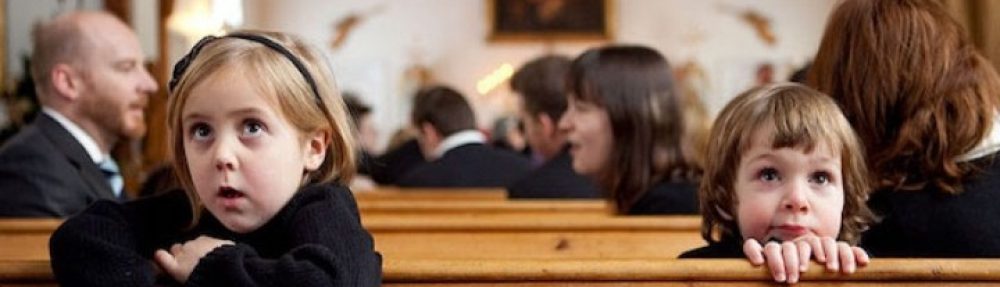
Decision Fatigue

Are you tired yet?   Tired of ‘all things Covid?’  Tired of protocols?  Tired of rapid tests?  Tired of feeling like everything is inside a bubble?  Tired of not being able to understand the cashier because of two masks and a layer of plexiglass?  Tired of the calculus of doom?  Life these days is filled with all kinds of fatigue.  Fatigue was not something I heard much about as a boy, but now it is everywhere. 

Caregiver fatigue is creating burnout and impacting care for the sick and elderly.   And while media pins ICU bed shortages on the unwashed masses, a nursing shortage is more to blame.  Then there is compassion fatigue.  Compassion fatigue is a creeping callousness toward suffering due to an overload of caregiving.   Those suffering compassion fatigue struggle to care about those they care for.  Now I am hearing about Decision Fatigue.  

Every routine action now requires an elaborate decision matrix.  The complexity of quarantine calculus requires a Cray supercomputer.   The statistics used as decisioning criteria are a classic GIGO (garbage-in, garbage-out) paradigm.  Facebook friends are obliterating straw men left and right, decrying the uninformed by declaring their own unsubstantiated misinformation to be self-evident to all non-Cretans.  We are going to war over decisions we are ill-equipped to make.  Mask or not? Vax or not?  The emotional exhaustion wrapped up in these questions is creating decision fatigue.   Struggling to make a decision is not necessarily a lack of decisiveness but more a function of fatigue. 

But for the Christian there is a decision fatigue much more persistent than our covid mitigation strategy.   How are we to live in the world, but not be of the world?  What is our relationship to culture?    The question has challenged the church throughout its existence: “How are Christians to engage and relate to the surrounding culture? How should we then live? What does it look like to be in the world but not of it?”

H. Richard Niebuhr’s classic book, Christ and Culture, he wrestles with this question. Niebuhr proposed five models:  Christ against culture; Christ of culture; Christ above culture; Christ and culture in paradox; and Christ the transformer of culture.  While Niebuhr does not resolve the tension this question creates, he puts his finger on its nuances.  While at some level each category resonates with Scripture and our experience, what is the complete picture?

Another theologian has described the church as a community of resident aliens.  Resident aliens have great power to influence and effect society.   They bring their particular cultural strengths to the table, but also foster the distinctives of their homeland.  They are a part of society, without losing their identity. The Church is to be like this – resident aliens, “an island of one culture in the middle of another.” (Phil 3:20)   But it must never be merely an enclave.  For while the Church fosters the culture of its heavenly homeland, its calling is to transform its sphere of influence, not just “coexist.” 

Revelation speaks to this question pointedly.   Written to a church under pressure to conform or be cast out, Revelation graphically pictures what it means for the church to be in the world but not of the world.   In the history of interpretation, however, this message has often been obscured by its apocalyptic medium.  

Revelation is a book of unveilings.  Beginning in chapter 17, the Spirit unveils the hideous nature and doomed future of worldly culture united only by its rebellion against God.   Though alluring and seductive, its ways are the ways of death.   In the chapters that follow, the church is warned and encouraged.  Warned not to be seduced from the way of Christ to the way of the world.  And encouraged by holding fast to Christ the church will endure eternally in radiant beauty and peace.

In Revelation 18, the Lord unveils the destruction of Babylon, the Harlot, who pictures rebellious, worldly culture.   The people of God are commanded to come out of her.  And while her lovers mourn her downfall from a distance, those who belong to God give thanks for her destruction.   At first glance this seems an ungracious, or even vindictive, portrait of the church. But a deeper examination reveals important insights into the responsibility and the relationship of the church to the world.  Join us this week as we examine Revelation 18 and consider what this passage says about our calling to be ‘in the world,’ but not ‘of the world.’

We meet on the square in Pottsville, right next to historic Potts’ Inn at 10:30 am for worship.  Get directions here or contact us for more info.  Or join us on Facebook Live @PottsvilleARP or YouTube

07/25/2021 | “Family Resemblance” | 1 John 2:28-3:10

Most Christians struggle with assurance.    The Psalmist aptly noted, “I know my transgressions, and my sin is ever before me.”   Grace is hard to believe, especially when applied to our own lives.   Assurance can be elusive.  We look for it in mountain-top experiences or powerful feelings.  But it is found in the common places of the Christian life; avoiding sin, pursuing righteousness, practicing fellowship and loving one another.  All things that are the fruit of grace, not it’s root.  Grace produces gratitude.  Gratitude fuels sanctification.  And sanctification brings conformity to the image of Christ.  And this family resemblance forms the foundation of solid assurance. 

Are you struggling with assurance?  Where will you find it?  John warns us against morbid introspection, encouraging us instead to look to the reality of Christ and the mundane realities of the Christian life – walking in fellowship, fleeing from sin, practicing righteousness, and loving one another.   Join us we examine 1 John 2:28-3:10 and consider how a family resemblance to Jesus gives us much needed assurance of faith.

“Family Resemblance,” 1 John 2:28-3:10

Beauty and the Beast

Beautiful things can be deadly.   Sensory appeal is often a trap designed to catch and kill.  The most poisonous frogs are the most colorful.  The prettiest mushrooms are the deadliest.   The anglerfish draws prey to its luminescent lure in the darkest depths of the sea.   And there are carnivorous plants that attract prey through sight and smell.

Botanists have categorized over 630 species of carnivorous plants.   Through color, smell, and visual features, these plants attract, trap and digest insects and animals to supply the nutrients they need.  Larger varieties are capable of digesting reptiles and small mammals. While others specialize in single-celled organisms.  Aquatic varieties eat crustaceans, mosquito larvae and small fish.

Among the most beautiful varieties are Sundews.   Sundews are “flypaper” plants that trap prey in sticky hairs on their leaves.  Long tentacles protrude from their leaves, each with a sticky gland at the tip which produce droplets of nectar. These droplets look like dew, glistening in the sun.  The nectar attracts prey, powerful adhesive traps it, and enzymes digest it. Once an insect becomes stuck, nearby tentacles coil around the insect and smother it.  Sundews kill their victims in 15 minutes, but digest them over weeks.  Interestingly, the plant’s deadly secretions are harmless to the assassin bug, which hides on the plant to prey on the helpless victims.  Sundews are indeed beautiful plants, but their beauty is intended to kill.

Beauty is often deadly.   And not just for insects.  Things that appeal to our senses and appetites may kill us as well.  Solomon surrounded himself with beautiful things, but both in Proverbs and Ecclesiastes, he noted their deceptive nature.   In Proverbs, he remarked, “Charm is deceitful and beauty is vain.”    And in Ecclesiastes, he opined, “’Come now, I will test you with pleasure, enjoy yourself.’ But behold, this also was vanity.”  

Solomon even personified Folly as a seductive woman.

The woman Folly is loud;
    she is seductive and knows nothing.
She sits at the door of her house;
    she takes a seat on the highest places of the town,
calling to those who pass by,
    who are going straight on their way,
“Whoever is simple, let him turn in here!”
    And to him who lacks sense she says,
“Stolen water is sweet,
    and bread eaten in secret is pleasant.”
But he does not know that the dead are there,
    that her guests are in the depths of Sheol. 

Proverbs 9:13-18

Our fairy tales have taught us that beauty often conceals a beast.   Revelation 17 gives us a vivid picture of this truth.  The seductive appeal of worldliness to supply meaning, fulfillment and safety, is a deadly ruse.   Revelation 17 begins a new division within John’s visions.  A division which emphasizes the distinction between the deadly deceptive charms of the world, pictured as a luxuriant but violent prostitute, and the enduring, life-giving beauty of Christ’s church, pictured as a radiant bride.  

In a world where Christ promises persecution while conformity to the world promises peace, it is easy to lose sight of this distinction between harlot and bride.   But the Lord unveils for John, and for us, a clear revelation of the deadly beast that lies in wait beneath great worldly allure.  Join us this week as we examine Revelation 17 and consider the seductive allure of seeking meaning, fulfillment, or safety from the things of this world.

We meet on the square in Pottsville, right next to historic Potts’ Inn at 10:30 am for worship.  Get directions here or contact us for more info.  Or join us on Facebook Live @PottsvilleARP or YouTube

Spiritual Cirrhosis

Nana’s house was a full of curiosities for a ten-year old boy.  The old pump organ, with its myriad of stops and swirling barstool seat entertained for hours.    The “old trunk” with a torn Confederate $100 bill, my great-grandfather’s powder-horn, and Uncle Charles’ well-worn army helmet conjured tales of bygone adventure.   Pictures of pagodas and of Mt. Fuji, sent from Uncle Tommy while in the service in Japan, were windows into a faraway world.   And her bolt action .22 rifle and her snuff cans lent an aura toughness to Nana that awed a young grandson.  

But most memorable was her Jello-O.    We never ate a meal at Nana’s without Jell-O.   Lime was my favorite.   And the Jello-O was always crowned with homemade whipped cream – a remarkable touch in a day when Cool Whip ruled the dessert scene.  Nana’s Jell-O was stiff, like what you find at the Chinese Buffet.  So stiff it would stop a bullet.  No worries about it melting.   No problems cornering it with your spoon.  You could carve it into any and it would hold fast.   My mother complained that it was too hard, that Nana used too little water, and did not follow the recipe.   But we loved it.    I still like my Jell-O this way.   Hardened Jell-O is the best.

But some things are not meant to be hardened.   If our internal organs harden, we have cirrhosis – a dangerous, and ultimately deadly condition.    If our attitudes or affections become hardened, we become bitter and alienated from everyone who tries to love us.   Of course, it is easy to become jaded, to harden our hearts against all the people and circumstances that disappoint us, reject us, and make life difficult.   But we are not meant for cirrhosis in our bodies, our heart, or our spirit.

Spiritual cirrhosis – bitterness against God and unrepentance for our sin — is the deadliest form of hardening.  Its effects go far beyond poisoned relationships or a terminal diagnosis.   It is a hardening with eternal consequences.    From beginning to end, the Bible reveals God as a God of mercy and forgiveness.  He provided an escape from the gravity of sin and death, through faith in the finished work of Christ.   Christ paid what we could not, so that we might have what only He deserved.   It is that simple.  Yet many would rather be the Captain of their Doomed Fate than trust Jesus.

I have always been amazed at the story of the serpent in the wilderness in Numbers 21.   The Israelite refugees are attacked by deadly serpents in the desert.   God provides a strange and gracious anti-venom.   He told Moses to fashion a serpent and put it on a pole.  Anyone who looked at the serpent would be spared.   Yet many died.  Why?  Because they simply were too hardened to look in faith to a serpent on a pole.    How much more deadly to be so hardened by life, so rebellious against God, so enslaved to a fallen world, that you will not simply look to the “Son of Man, lifted up” on the cross?

Often men think of confession and repentance as unpleasant and punitive.   But through these means is found grace and mercy.   After all, it is “the kindness of God that leads to repentance.”   But refusing God’s grace is both the result and agent of a hardening heart and an unrepentant spirit.   Revelation 16 is a shocking passage.   In this, the final cycle of seven judgments, the bowls of wrath are poured out.   They are not revealing, nor announcing, they are enacting God’s righteous judgment against those who have repeatedly refused God’s lavish grace.   But even in these judgements, there seems to be a call to turn back.  

Revelation 16 reminds men of the completeness, the inescapability, the eternality of God’s wrath against unatoned sin.    Yet it reveals something even more dreadful.   Those hardened against grace, are hardened even more in judgement.   As bowls are emptied, men experiencing God’s righteous judgement express no sorrow, no remorse, no repentance.   The penitent thief, standing under judgement declared, “do you not fear God since you are under the same sentence of condemnation, and we indeed justly, for we are receiving the due reward for our deeds.”   But men experiencing the bowls of God’s wrath “cursed the name of God, did not repent and give him glory.”   They were hardened.  Hardened by the deceitfulness of sin.  Hardened because they saw only a God of wrath and fury, not the God of grace and mercy. 

What about you? Has disappointment with life, or perhaps with God himself, hardened you?   Can you feel yourself growing more and more this way?  Is hardening in your mind, attitude, and relationships metastasizing into your spiritual life as well?    Is God only a God of wrath and fury to you, or do you know him as a God of grace and mercy?  Join us this week as we examine Revelation 16 and consider its warning against “spiritual cirrhosis.”

We meet on the square in Pottsville, right next to historic Potts’ Inn at 10:30 am for worship.  Get directions here or contact us for more info.  Or join us on Facebook Live @PottsvilleARP or YouTube

07/18/2021 | “Missing Out” | Revelation 15:1-8

Sometimes it is better to miss something than make it.    Robert Corrigan of Clam Point, Massachusetts discovered this when he overslept and missed his flight to LA.   He arrived at the departure gate just as his plane was pushing back.   An hour later, he was still at the airport, waiting for a standby flight, when he saw the news that his flight, United #175, had crashed into the South Tower of the World Trade Center.  Missing that flight saved his life. 

Revelation 15 unfolds the final chapter of the drama of redemption.  The saved and sealed sing of the mercy and grace of God, even as a righteous and holy God sets the stage for His wrath to be poured out against a warned world.   Scripture says that we are all, by nature, children of wrath.   But only through faith in Christ, will we become children of the King and escape the wrath to come.   What about you?  Are you still a child of wrath?  Are seven bowls in your future?  Or will you miss out – miss out on unrepentance, on wrath, on judgement, and on eternal death.    Some things are better to miss than to make.   Join us as we examine Revelation 15:1-8 and consider the great joy of missing out on the righteous and holy judgement of God.

Family Resemblance

Long before social media took up the mantle as spokesman for cliché Christianity, the church sign attempted to carry the torch.  Church signs are notorious haunts for heretical theology, inflammatory rhetoric, and worn-out puns.   Like the writer’s empty page, church signs are literary tyrants, always demanding concise, profound, and engaging posts.  Rarely does one hit this mark.  Often, they do not even hit the target.   But not too long ago, I saw a church sign that resonated with me.   “If God is our Father, then shouldn’t there be a family resemblance?”

While not a novel thought, it is a powerful word.   The scripture reminds us that it is God’s will for us to be conformed to the image of Christ, the only begotten and beloved Son.  We are also called to be “imitators of God as dearly loved children.”  And in John 8, Jesus calls out the Pharisees when he points out that the testimony of their lives contradicts their claim to be children of Abraham and Sons of God.  Like a skillful prosecutor, Jesus builds the case that they resemble Satan more than God and then makes a stunning summation.

You are of your father the devil, and your will is to do your father’s desires. He was a murderer from the beginning, and does not stand in the truth, because there is no truth in him. When he lies, he speaks out of his own character, for he is a liar and the father of lies.

John 8:44

How well do we resemble our Heavenly Father?  As others examine our lives what conclusion will they draw about our Father’s identity?  While imitating someone does not make us their child, being someone’s child will inevitably lead to imitation.   Imitation goes deeper than mere appearance, it reflects the reality of relationship.   And while it is important for others to observe a family resemblance, it is even more important for us to see it in ourselves.  

John’s first letter was written to refute an early heresy that Jesus was not a real man, but only appeared to be so.  This heresy, if true, would not only destroy any possibility of salvation for believers, but also any assurance believers might have as to their condition before God.   As John assures us of Christ’s true humanity, he also reveals where we are to find assurance of our faith – assurance demonstrated most clearly through a family resemblance to Jesus.  

Most Christians struggle with assurance.    The Psalmist aptly noted, “I know my transgressions, and my sin is ever before me.”   Grace is hard to believe, especially when applied to our own lives.   Assurance can be elusive.  We look for it in mountain-top experiences or powerful feelings.  But it is found in the common places of the Christian life; avoiding sin, pursuing righteousness, practicing fellowship and loving one another.  All things that are the fruit of grace, not it’s root.  Grace produces gratitude.  Gratitude fuels sanctification.  And sanctification brings conformity to the image of Christ.  And this family resemblance forms the foundation of solid assurance.  F. F. Bruce’s comments on 1 John 3 express this well.

The words used to denote relationship to God carry with them also the connotation of likeness to God; the two ideas are inseparable, for likeness is proof of relationship….  John makes it clear that membership in the family of God is to be recognized by the family likeness; since the Father of the family is righteous, the children will practice righteousness….   In Genesis, God declares His intention of bringing into existence beings like Himself, as like Himself as it is possible for creatures to be like their Creator.   But Genesis 3 tells how man, not content with true likeness to God which was his by creation, grasped at the counterfeit likeness held out as the tempter’s bait.  In consequence, things most unlike God manifested themselves in human life: hatred, darkness and death in the place of live, light and life.  The children of God, who enter His family through faith in His son, display their Father’s likeness, because of their conformity to Him who is the perfect image of the invisible God.   

FF. Bruce, The Gospel and Epistles of John

Are you struggling with assurance?  Where will you find it?  John warns us against morbid introspection, encouraging us instead to look to the reality of Christ and the mundane realities of the Christian life – walking in fellowship, fleeing from sin, practicing righteousness, and loving one another.   Join us this week as we examine 1 John 2:28-3:10 and consider how a family resemblance to Jesus gives us much needed assurance of faith.

We meet on the square in Pottsville, right next to historic Potts’ Inn at 10:30 am for worship.  Get directions here or contact us for more info.  Or join us on Facebook Live @PottsvilleARP or YouTube

Missing Out

“What did I miss?”   We scarcely need ask this anymore.   Modern life comes with a pause button.   In a digital world can put all our stories on hold while we attend to the tyranny of the urgent.    But ‘back in the day,’ you only had one shot to catch the latest episode of your favorite story.   If you missed it, you missed it.  

Such was my lament over Rudolf the Red-Nosed Reindeer.   It aired only once a year – the first Sunday of December at 8 pm.    There were no video tapes, no streaming video, no second chances.  If you missed it, you missed it.   And while my father was not completely opposed to me watching it on a Sunday evening, the problem was – we were never home.   Sunday evening was a time for “Training Union” (i.e. discipleship) and evening worship.   The service ended at 7:00 pm, the church was 32 minutes from home. 

Allowing for modest post worship conversation, getting home in time was always technically doable, but we never made it.   Invariably, my father would have deacon’s meeting, or a visitor would appear and my parents would engage in lengthy ‘get-to-know-you’ conversation. Of course, my parents had chosen the ‘better things.’  Looking back, the claymation of Rudolf was sub-par, the story’s ideology reprehensible, and the once-venerable Santa recast as a selfish, unrepentant bigot.   But at the time, watching Rudolf the Red-Nosed Reindeer and Frosty the Snowman were required to fulfill all righteousness at the festive season.   I was an adult before I saw the opening sequences.   

Perhaps, in retrospect, it is better that I missed Rudolf and got to see my father’s service and hospitality!   Sometimes it is better to miss something than make it.    Robert Corrigan of Clam Point, Massachusetts discovered this when he overslept and missed his flight to LA.   He arrived at the departure gate just as his plane was pushing back.   An hour later, he was still at the airport, waiting for a standby flight, when he saw the news that his flight, United #175, had crashed into the South Tower of the World Trade Center.  Missing that flight saved his life. 

Revelation 15 unfolds the final chapter of the drama of redemption.  Seals have revealed God’s judgements and Trumpets have announced them.   All men deserve these judgements.   But a great and marvelous sign appears, a woman from whom would come a redeemer, a Lamb, slain, who saves and seals his own with the seal of the living God, the Holy Spirit.   Every last sealed saint is brought safely to salvation.   Despite the fury of the dragon and his beasts, nothing overcomes them.   They are the overcomers.  The final judgements of God are about to be poured out.  With them, the wrath of God is finished.  But like the Israelites of Goshen, those who belong to the Lamb miss these terrible plagues.

Revelation 15 begins with a great contrast.  The saved and sealed sing of the mercy and grace of God, even as a righteous and holy God sets the stage for His wrath to be poured out against a warned world.   Scripture says that we are all, by nature, children of wrath.   But only through faith in Christ, will we become children of the King and escape from the wrath to come.   What about you?  Are you still a child of wrath?  Are these terrible bowls in your future?  Or will you miss out – miss out on unrepentance, on wrath, on judgement, and on eternal death.    Some things are better to miss.   Join us this Lord’s Day as we examine Revelation 15:1-8 and consider the great joy of missing out on the righteous and holy judgement of God.

We meet on the square in Pottsville, right next to historic Potts’ Inn at 10:30 am for worship.  Get directions here or contact us for more info.  Or join us on Facebook Live @PottsvilleARP or YouTube

Homeward Bound

Animals have an uncanny ability to find their way home.   Pet lore is replete with Homeward-Bound-like tales of Chance, Sassy, and Shadow overcoming perilous journeys against unbelievable odds to return to their people.   We don’t know how they do it — how they sense direction, how they navigate the way home.   Especially since we, their masters, are so easily disoriented and often profess, ‘you can’t go home again.’

The journey of the salmon is a dramatic illustration of an animal’s ability to find its home.   Salmon spawn upstream, in freshwater pools.   As they grow, they migrate to the sea.  They travel thousands of miles through open ocean to feed.    But when it is time to become parents, they travel back to the spot where they were born.  This amazing journey is much observed, but little understood.  Scientists theorize that salmon are guided by sense of direction and smell.  

As the salmon makes its initial trip to the sea, it somehow ‘records’ the chemical signatures, as well as celestial, barometric, and geomagnetic details of the waterways through which it passes.   This enables the salmon to geotag its birthplace.   Capable of discerning the chemical signature of its birth-pond to parts per billion, the salmon literally follows its nose home.

The ability of the salmon to find its way home is beyond belief, but it pales in comparison to the promise of Scripture that the Lord ‘knows his own’ (2 Timothy 2:19) and will not lose any that belong to him.   Nothing can keep him from finding us.  No one can snatch us from his hand.  Nothing can separate us from the love of God which is ours in Christ Jesus.   We know this intellectually, but it is easy to feel lost sometimes.   Our sin and circumstance often seem to obscure his love, his promises, and his mercy.    While scripture exhorts us to assurance, we all struggle to feel that our calling and election are sure.   When the day comes for us to stand before him, will He recognize us?   When the Lord comes again in glory will we be obscured among the tares?  

Any child, lost in a crowd, knows this fear.   They cry out for their parents, but the voices and bodies of the crowd swallow them up, threatening to prevent their reunion.   Have you every felt that way spiritually?  Lost and afraid you would never be found?  Fortunately, the scripture promises us that the Lord is perfectly able to find us, rescue us, and bring us to himself.  

At the beginning of Revelation 14, the true Lamb appears with those where were sealed by the living God with the Holy Spirit.  God’s own, there pictured as ‘the 144,000.’   The church militant has become the church triumphant.   In his fury, the Dragon made war against them, but there were no casualties.  Their number is not diminished.   Every one sealed is saved.  Not one is lost.   Despite the ravages of the enemy, the people of God stand victorious and sing victory songs before the throne. 

And as Revelation 14 unfolds even further, the scene moves from the first-fruits, to the finished harvest.   At the end of the age, the Lord returns in glory to collect all of his own and to carefully distinguish the wheat from the tares, the sons of light from the sons of darkness. None are confused.  None are mixed.   None end up in the wrong basket.  God loses none he purposed to save.  None are lost who trusted in grace.   But all are lost who trusted in their works or wits.   Do you have this kind of assurance?   If not, where is your hope? 

Are you trusting in God’s grace in Jesus, or in your own works or wits?  Final judgement before a Holy God is a certainty.  Scripture is unequivocal in this truth.   But it is equally adamant that “all who come to [Jesus] will never be cast out.”   Join us this Lord’s Day as we consider Revelation 14:14-20 and consider the assurance of God’s promise that he is coming again and when he does, he will take us – all of us that are his – to himself.   No child of his will be left behind.

We meet on the square in Pottsville, right next to historic Potts’ Inn at 10:30 am for worship.  Get directions here or contact us for more info.  Or join us on Facebook Live @PottsvilleARP or YouTube

Tunnel Vision

Chickens are not the smartest creatures on God’s green earth.   When they actually fly, they invariably land in danger.   Despite an acute ability to spot food on the ground in front of them, they prefer to chase each other to the point of exhaustion when one finds a grub.  Though provided with spacious, clean, inviting nest boxes, they pile up two or three deep in some cramped spot to lay eggs.  And they mindlessly pursue any spot of red anywhere and on anything.    Their tiny brains are remarkable only for the remarkably dumb things they do.

But for all the shortcomings, the chicken’s vision is truly amazing.   Having eyes on each side of their head gives the chicken a 300° field of vision.  The left eye is far-sighted to keep an eye to the sky, while the right is near-sighted to provide microscopic vision of the ground in front of them.   With more cones than humans, they see a larger spectrum of color and more subtle contrasts.   This makes them sensitive to the most minute movement in their environment.   And even if a chicken is blind, it has a special gland in the top of its head that distinguishes daytime from nighttime.   The chicken’s vision is truly remarkable.   While their brains are small, their perception is enormous.

Human perception, by contrast, is more limited.   Our field of vision is only 180°, assuming our peripheral vision is perfect.   But peripheral vision is easily reduced by injury or trauma.   Extreme stress can limit our sight to just what is in front of us; a condition we call ‘tunnel vision.’    Tunnel vision is dangerous because it removes visual context.  And visual context is critical in order to understand what we see.     High stress encounters by soldiers and law enforcement have documented the tragic consequences of tunnel vision.   Unintentional victims have been wounded or killed, because combatants simply did not see them in the field of vision.    Tunnel vision can be dangerous, and even deadly.

But tunnel vision is not only a danger for our physical eyesight.    We can develop tunnel vision in our spiritual perspective, assessing our circumstance without the context faith peripherally provides.   The enemy of our soul, the ancient Serpent, Satan, wants to blind us to the truths of God’s power and promises.   He creates drama and trauma in our lives, then voices a new possibility.  “Did God really say?”   Perhaps God did not mean it?  Perhaps God cannot be trusted?   Perhaps we must look elsewhere for truth?  Satan is forever working to foster suspicion of God.  And accusation against you.   To give us tunnel vision.  His relentless assaults on God’s promises wear us down, destroy hope, and fill us with despair.    Satan wants us to see only the insurmountable crisis and unsolvable brokenness right in front of us.  But not the promises of God which surround us.

We see this unfold in Revelation 13.   Satan’s rage against God is focused on God’s people, the church.   Two beasts arise, making war against the saints, conquering them through crushing power and relentless propaganda.   The picture seems hopeless.   But that is not the end of the story.   In this book of comfort, God restores peripheral vision, revealing the rest of the story.   Satan’s conquest is short lived.   The true Lamb appears with those where were sealed by the living God with the Holy Spirit.   Their number is not diminished.   Every one sealed is saved.  Not one is lost.   Despite the ravages of the enemy, the people of God stand victorious and sing victory songs before the throne.   The lies of the Dragon were just that.  His boasts, his threats, his accusations, his propaganda all come to nothing.   The Lamb is the King of Kings and Lord of Lords.  And the saints, who did not love their lives unto death have conquered the Dragon by the blood of the Lamb and the testimony of Jesus.

Have you developed tunnel vision in your spiritual life?   Has hopelessness gripped you, chipping away at your faith?   In Revelation 14, God corrects our vision.   He restores the periphery of faith and heals us of tunnel vision.   The attacks of the enemy are powerful, but they cannot snatch one single saint from the hand of their God, nor separate us from the love of God in Christ Jesus.  Join us this Lord’s Day as we consider Revelation 14 and learn to avoid spiritual tunnel vision.

We meet on the square in Pottsville, right next to historic Potts’ Inn at 10:30 am for worship.  Get directions here or contact us for more info.  Or join us on Facebook Live @PottsvilleARP or YouTube

Propaganda

‘Propaganda’ is an ugly word.   It conjures images of the Third Reich, Tokyo Rose, and the Soviet-era news agency, TASS.   The dictionary defines it as:

Information, especially of a biased or misleading nature, used to promote or publicize a particular political cause or point of view.

As a boy, I pitied the Soviet people –oppressed by their own government and media through a systematic campaign of selective reporting, misinformation, and outright manipulation.   I was glad to live in a free society with a free press where government and media trafficked only in facts.   Propaganda was the tool of tyrants. Or so I thought.

But propaganda has a long and varied place in the history of communication.   Words have power even swords cannot wield.   Men are more easily compelled to yield freedoms and convictions to words, ideas, and slogans than brute force.   Especially when they believe these words, ideas, and slogans are unadulterated with bias or ulterior motives.

We pity those under the thumb of propaganda as we scroll mindlessly through highly curated social media, censored news feeds, Instagram influencers, and clairvoyant popup ads.   We decry media bias and quickly fall in line with whatever our feed feeds us to think.    The hubris that tells us ‘we are invulnerable to propaganda’ is what makes us even more vulnerable.  

What is worse, the more our lives are mediated by our devices, the more propagandized we become.    John Stonestreet recently noted in an interview on The World and Everything In It, “we have been catechized by our devices – to react and not think.”   He explains.

Think of how many times a story makes everyone breathlessly angry. And just a few hours or days later, the larger context comes out, either through more video being released, and suddenly realize the entire story is wrong. Or the entire story that you reacted to was wrong. Now, I don’t know any way around that other than have better habits than everybody else. Don’t feel like you have to tweet about something because somebody, you know, says, anybody who doesn’t speak up is complicit. That’s bogus language, based on a society that is addicted to quick takes an outrage instead of the truth. 

Words are powerful.   Ideas have consequences.    Satan’s war against God, against Truth, and against the Church began in the Garden of Eden as a war of words.   As Adam and Eve stood gazing at the forbidden fruit, Satan voices a new possibility.  “Did God really say?”   Perhaps God did not mean it?  Perhaps God cannot be trusted?   Perhaps we must look elsewhere for truth? 

Satan’s tactics have not changed.  He is a liar and the father of lies.  Lying is his native speech.  He is not merely trying to win us to his position or gain our support by his propaganda, he wants us dead.   He hates us because we bear God’s image.   His repeated failure to secure God’s throne has not wearied him.   On the contrary, he is more enraged than ever.  

Revelation 13 unfolds this rage.   Two beasts emerge.  One from the sea and one from the earth.  An unholy Trinity of counterfeits to Father, Son, and Holy Spirit emerge in the dragon, the beast from the sea, and the beast from the earth.   They are poor counterfeits but they lead the world astray to make war against the Church.

The first beast is a wild brute.  He unleashes Satan’s fury by a frontal assault against the church — pursuing, crushing, and destroying.  But Satan also has a more subtle strategy.  A second beast arises from the earth.  He appears as a lamb with two small horns, but speaks with the voice of a dragon.  While he looks gentle, harmless, and trustworthy, his words are anything but.  Through this beast, Satan assaults the Church in the realm of ideas and words, forever working to foster suspicion of God.  

How careful are you to test the spirits of this age?   To view your world, not through your devices, but through the Word of God?   Join us this week as we examine Revelation 13:11-18 and consider the call to resist Satan’s ministry of propaganda.

We meet on the square in Pottsville, right next to historic Potts’ Inn at 10:30 am for worship.  Get directions here or contact us for more info.  Or join us on Facebook Live @PottsvilleARP or YouTube