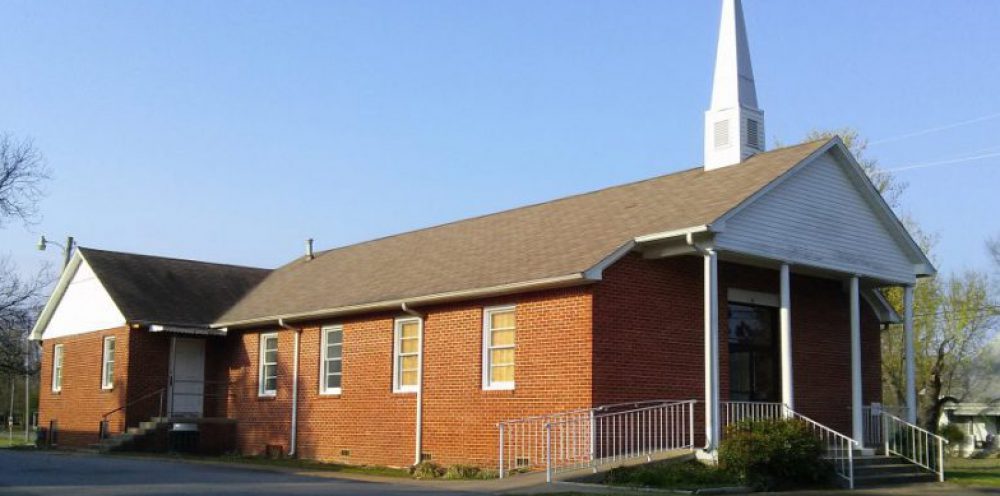
If internal organs harden we are concerned! But are we concerned about spiritual heart-hardness? The plagues of Egypt judged its gods and people. They were triggered by Pharaoh’s hardened heart. Hardened hearts are deadly. But there is a cure. Listen as we examine Exodus 7:14-25 and consider the consequences and cure of a hard heart.
Tag Archives: Associate Reformed Presbyterian
06/26/2022 | “Lesson Learned” | Exodus 6:28-7:13
Faith grows when we put our weight upon faith’s object and it holds. Temporal things: skill, personality, talents, or circumstances will not hold up. God alone holds all things together, carries us, our sorrows and our afflictions. He alone will not give way. But have we learned this lesson? Listen as we examine Exodus 6:28-7:13 and consider some of the lessons learned by Moses about God’s promises and power – lessons we need to learn.
06/19/2022 | “Faith of Our Fathers” | Exodus 6:14-30
As Moses prepares to confront Pharaoh and initiate the most awesome display of spiritual power the ancient world had seen in the plagues, the Holy Spirit presses the pause button. He gives us a genealogy and reminds us of the importance of being faithful men and women, boys and girls, following Christ and leaving a legacy of following Christ. Listen as we examine Exodus 6:14-30 and consider the formative power of the ‘Faith of Our Fathers.’
Limelight
Shakespeare was a theatrical genius. His plays and poetry shaped modern English. But it was his was showmanship that made his plays a staple of Sixteenth Century British pop culture. Long before we talked about performance art, Shakespeare placed his audiences in the action. And he concocted lavish, though sometimes dangerous, special effects for his Globe productions.
If you go to London today, you can tour the reconstructed Globe. Whether you like Shakespeare or not, do not miss it. It was there I learned that the phrase “in the limelight” referred to a volatile lime mixture ignited in lamps to spotlight prominent actors. It was “in the limelight” that Shakespearean actors brought kings and yeomen, saints and blackguards, witches and wood nymphs to life. The limelight is the place of drama. Yet the limelight is also the place of testing. A prominence where our qualities are observed, examined, and critiqued. The place where we should be most authentic, but are most tempted to play a role.
Canadian rockers, Rush, drew from Shakespeare when they mused.
Living on a lighted stage
Neil Peart, “Limelight” on Moving Pictures
Approaches the unreal
For those who think and feel
In touch with some reality
Beyond the gilded cage
Cast in this unlikely role
Ill-equipped to act
With insufficient tact
One must put up barriers
To keep oneself intact
All the world’s indeed a stage
And we are merely players
Performers and portrayers
Each another’s audience
Outside the gilded cage.
When we are thrust into the limelight, when that moment of fame, notoriety, exposure, prominence comes – not matter how expansive, will we be merely a player? Performers or portrayers? Or will we act out what is real? How we answer this question says a lot about how we live out our Christian faith. Others are watching, assessing, critiquing, deciding based on whether our walk is consistent with our talk. While we sigh and roll our eyes when someone declares they are “spiritual but not religious,” perhaps the trap for many professing Christians is to be “religious but not spiritual.”
Are we each other’s audience, playing a role, that any critical eye will unmask? Or are we living coram deo, before the face of God. Is He the only audience we are concerned about? The men in the Scriptures who received the most dramatic judgment of God were “religious but not spiritual.” They professed great piety, but possessed no love for Christ. The men of Jeremiah’s day were more religious than any of their forefathers, but also more apostate. The prophets noted that the faithless worship was a stench in God’s nose and a trampling of God’s courts. And the Pharisees were merely whitewashed tombs. Jesus warns.
“Not everyone who says to me, ‘Lord, Lord,’ will enter the kingdom of heaven, but the one who does the will of my Father who is in heaven. On that day many will say to me, ‘Lord, Lord, did we not prophesy in your name, and cast out demons in your name, and do many mighty works in your name?’ And then will I declare to them, ‘I never knew you; depart from me, you workers of lawlessness.’”
Matthew 7:21-23
Are you religious but not spiritual? Are you all profession, but no possession? Is your Christianity
Cast in [an] unlikely role
Ill-equipped to act
With insufficient tact
Full of pious barriers
To keep [yourself] intact?
Pharaoh’s heart was hard. Moses confronted him time and time again. But as the plagues unfolded, Pharaoh moved from raw defiance to feigned deception. After the plague of frogs, we meet a Pharaoh who acknowledges the Lord, the power of prayer, the sovereignty of God, and shows respect for God’s servant, Moses. Yet nothing changed in his heart. And in the end, he showed his true colours and rebelled against God’s command. He appeared to be softening, but nothing had changed. The hardest hearts belong to those who exhibit theological acumen and piety yet have no living faith.
What about you? Are you “religious, but not spiritual?” Do you have theological knowledge and pious practice, but no living faith in Christ? Join us as we examine Exodus 8:1-15 and consider Pharaoh “religious, but not spiritual” response to the plague of frogs.
We meet on the square in Pottsville, right next to historic Potts’ Inn at 10:30 am for worship. Get directions here or contact us for more info. Or join us on Facebook Live @PottsvilleARP or YouTube.
Cardiopathy
Most of us are concerned about the condition of our heart. Every trip to the doctor involves a check of our ‘vital signs.’ Vital signs which assess either a direct metric of our heart’s performance or some downstream effect, such as our blood oxygen level. No matter what medical concerns brought us in, our health care providers want to know our heart is working well. Nothing in the machinery of our anatomy reflects the frailty of life like our heart. Only one heartbeat separates life and death, the here-and-now from eternity.
Despite our modern debates, the presence of a heartbeat is still the core criteria for distinguishing life from death. A sound heart is so fundamental to being alive, that our language enshrines the ‘heart’ as the center of our being. It represents our will, our desires, our affections, our deepest thoughts. We use the heart to describe our physical, emotional, and spiritual condition. And so, the thought of having heart problems brings existential crisis. The clinical term is cardiopathy which refers to any disease or disorder of the heart.
The thought of cardiopathy creates anxiety and imminent concern for our mortality. Especially, cardiopathies with few effective treatments. I recently read about “stiff heart syndrome.” Stiff heart syndrome is a condition in which the heart muscle thickens due to chronic high blood pressure. It is a warning sign of developing congestive heart failure. When the heart muscle can no longer efficiently pump blood, it can lead to fluid build-up in the lungs and limbs and cause shortness of breath. The heart quite literally becomes hard.
Degeneration and death come from a slow, progressive process of heart hardening. The good news is that it can often be prevented through diet and lifestyle choices. But once you have it, it is not easily treated. Any time a life-giving organ turns to stone we should be concerned. But are we as concerned for the hardness of our hearts, spiritually – a condition far more deadly, with eternal consequences?
The Bible shows us the devastation of a spiritually stiff heart through the example of the Pharaoh in the book of Exodus. The plagues, or mighty acts, God used to deliver his people from the oppression of Pharaoh were a judgement against both the people and the gods of Egypt. And they were connected to Pharaoh’s hard and hardening heart. From the start, the Lord declared that only the death of the firstborn would bring deliverance, but He graciously brings the progressive destruction of the plagues to reveal His glory, that the Hebrews and the Egyptians might “know the Lord.”
But Pharaoh persisted in unbelief. And it brought disaster to his nation and his family. He is a prime example of the destruction produced by a spiritually stiff heart. And a warning to us. The author of Hebrews warns.
Take care, brothers, lest there be in any of you an evil, unbelieving heart, leading you to fall away from the living God. But exhort one another every day, as long as it is called “today,” that none of you may be hardened by the deceitfulness of sin. For we have come to share in Christ, if indeed we hold our original confidence firm to the end. As it is said, “Today, if you hear his voice, do not harden your hearts as in the rebellion.” For who were those who heard and yet rebelled?
Hebrews 3:12-15
How many times have you heard the free offer of God’s grace and yet rebelled? Is your heart hard or hardening? Take heart! There is good news. Hard-heartedness need not be the last word. The Bible promises, “Behold, now is the favorable time; behold, now is the day of salvation.” And “And I will give you a new heart, and a new spirit I will put within you. And I will remove the heart of stone from your flesh and give you a heart of flesh.” There is a cure for spiritual stiff heart syndrome. Join us this Lord’s Day to hear more as we examine Exodus 7:14-25 and consider the consequences and cure of a hard heart.
We meet on the square in Pottsville, right next to historic Potts’ Inn at 10:30 am for worship. Get directions here or contact us for more info. Or join us on Facebook Live @PottsvilleARP or YouTube.
Lesson Learned
First it was a Nigerian widow who wanted to contribute $43,000,000.00 to our church. Then a friend who was stranded in France without money or passport. Next, the IRS called in from Puerto Rico to tell me that criminal proceedings were beginning in response to back taxes. Rachel and Veronica kept my phone hot inquiring about my lapsed car warranty and unpaid student loans – neither of which I ever had. And now representatives of Norton Security with atrocious spelling and even more unbelievable names are emailing me from clearly fraudulent domains to thank me for my $827 renewal of virus protection software I haven’t used since Win95.
Does anyone really fall for this? After all my spam filters have gotten so good that I never see most of this until my monthly spam purge. Even my smart phone is smart enough to change Rachel and Veronica’s names to “Spam Risk” or “Telemarketer.” And yet, they are unmoved. Confidence men or ‘conmen’ in the vernacular, continue with courage undaunted. Someone will always fall for their spiel. If not you, then the next mark. It is a numbers game fueled by the certainty that some people never learn. Or as P. T. Barnum was reputed to have said, “there’s a sucker born every minute.”
Pop psychologist Maria Konnikova examined this remarkable idea in her 2016 book, The Confidence Game: Why We Fall for It…Every Time. She asks and attempts to answer age-old questions.
While cheats and swindlers may be a dime a dozen, true conmen—the Bernie Madoffs, the Jim Bakkers, the Lance Armstrongs—are elegant, outsized personalities, artists of persuasion and exploiters of trust. How do they do it? Why are they successful? And what keeps us falling for it, over and over again?
In her attempt to answer these questions, Konnikova brings readers into the world of the con, examining the relationship between artist and victim. The Confidence Game asks not only why we believe con artists, but also examines the very act of believing and how our sense of truth can be manipulated by those around us. No matter what you think of her conclusions, she puts her finger on difficulty of learning our lessons from a bad experience. We like to say, “fool me once shame on you, fool me twice, shame on me.” But how careful are we really to learn our lesson?
We know Santayana’s maxim that “those who cannot remember the past are condemned to repeat it.” We see this play out every day. But do we learn our lessons? And while this is important in regard to our relational, vocational, financial, and parental choices, it is of eternal importance in regard to our faith. Faith grows as we exercise it. And that exercise, not unlike physical exercise often comes in painful and trying circumstances. The agency of sanctification is always refinement in the crucible of tribulation, suffering, need, or uncertainty.
Faith grows when we lean into it, putting our weight upon the object of our faith. The biblical word ‘faith’ carries with it the idea of standing on something to see that it will hold up and not give way. The temporal things of this world and indeed your own skill, personality, talents, or circumstances cannot bear the weight of adversity in this life – but God can. The Bible describes him as one who holds all things together, who carries us, who carries our sorrows and afflictions, and upon whom we can cast our cares. He alone is the trustworthy object of our faith. But how well have we learned this lesson?
Moses struggled to learn this. His expectations of how God would work contradicted what God had revealed to him. He did what he was asked. He went to Pharaoh but his actions only made life more bitter for the Hebrew people. Pharaoh’s heart grew harder with every exchange. And his resolve grew greater with every refusal. What kind of deliverance was this? Moses was disappointed with his circumstance, himself, and most of all with God.
But Moses was still placing his faith in himself and not in God’s promises and God’s power. At the end of Exodus 6, God tells Moses to return to Pharaoh. Moses complains, “what’s the use, I am a man of faltering speech.” But he goes anyway. This time, however, he is careful to do exactly what God told him – no going off script, making apologies for God, or trying to smooth out what God said to make it more acceptable the unbelieving king.
Moses learned a lesson. Our faith in not in our faith, but in the object of our faith – God’s promises and power. Join us this Lord’s Day as we examine Exodus 6:28-7:13 and consider some of the lessons learned by Moses about God’s promises and power and character – lessons we need to learn.
We meet on the square in Pottsville, right next to historic Potts’ Inn at 10:30 am for worship. Get directions here or contact us for more info. Or join us on Facebook Live @PottsvilleARP or YouTube.
Faith of Our Fathers
I admit it. I was afraid of the prospect of changing diapers. When my first child was born, I rushed to change that first diaper. I had to conquer my fear from the get-go. But I had not done my homework. I was not prepared for meconium. It was more than I had bargained for – much more.
But meconium was not the most shocking aspect of becoming a father. Most unexpected was the realization that my children would look at me, the way I had looked at my own father. I never for an instant believed he did not know how to handle any and every situation. He always had a plan, seemed to have things under control – except, that is, when he attempted to fix household appliances.
But as a new dad, I was painfully aware that I did not know how to handle any and every situation. I did not always have a plan, nor did I have things under control. As a child my confidence in my father made the uncertain certain and made the impossible possible. He taught me to plan, to write, to teach. He taught me the importance of serving others, and in particular, of serving Christ.
He had his faults to be sure, but I am thankful to be my father’s son. His shoes were very big. I sat with him as he drew his last breath in this life. I was surprised by an overwhelming sense of being untethered as he left us. Though I was almost fifty years old with seven children of my own, the thought of a world without my father seemed unexpectedly daunting.
Our fathers define us. Either by their place in our lives, or by their absence. Some infused us with strength and confidence, while others saddled us with weakness and insecurity. In one way or another we are all shaped by fatherhood. Dads, how are you shaping your family? What legacy will you leave? And what mark will your family make upon the world as it unfolds into history? Genealogy, the study of our generations, is often more about where our family is going than where it started. Where is your family going? What will be its legacy?
Genealogies in the Bible often seem quite out of place, interrupting great stories just as they reach a high point. They can be tedious. And often they are the bane of our daily Bible reading plan. But they are no less “breathed out by God and profitable for teaching, for reproof, for correction, and for training in righteousness, that the man of God may be complete, equipped for every good work.” (2 Timothy 3:16)
Tucked in among unpronounceable Hebrew names and begats are some very important theological and practical truths. God is a God of real people and real history. God works through families and generations. God sees, knows, hears, and directs parents, spouses, children, and outsiders toward his grace through their relationships. No one falls through the cracks. No one is unknown or unnoticed. And no one is found among ancestors or descendants who ‘has it all together.’ Every generation needs a savior and looks to Christ.
As Moses prepares to confront Pharaoh and initiate the most awesome display of spiritual power the ancient world had seen in the plagues, the Holy Spirit presses the pause button. He gives us a genealogy and reminds us of the importance of being faithful men and women, boys and girls, following Christ and leaving a legacy of following Christ. Join us this week as we examine Exodus 6:14-30 and consider the formative power of the ‘Faith of Our Fathers.’
We meet on the square in Pottsville, right next to historic Potts’ Inn at 10:30 am for worship. Get directions here or contact us for more info. Or join us on Facebook Live @PottsvilleARP or YouTube.
05/29/2022 | “Fear Not!” | Luke 21:5-19
“Fear Not!” is common in scripture. But how can we possibly obey it? After all fear is a response to circumstances we cannot control. Our finitude creates anxiety. We are not in control. We never were. But what God commands, He provides. The remedy for fear is faith in the one who is in control. Luke 21:5-19 appears fear-filled. But closer examination reveals assurance and victory. Listen as we consider how God equips us to advance the gospel through this tremendous assurance.
05/22/2022 | “Raising a Stink” | Exodus 5:1-23
God’s Word to Pharaoh raised a stink. His heart was hardened by it. He not only refused Moses’ demands, but made the peoples’ lives more bitter. The Good News always raises a stink. But Moses raised a stink as well. Pharaoh’s is not the only unbelief. When the gospel did not act how and when Moses thought it should, he raised a stink with God.
How do you handle disappointment when God does not act as you expect? When His promises seem out of reach? When following Christ makes life worse, not better. Listen as we examine Exodus 5:1-23 and consider how we respond to disappointment.
Fear Not!
He was a young man on the edge. He knew in his heart, his mind, his will he needed to take the next step. A step either glorious or tragic. Yet he was unable to move, paralyzed with fear. Absolutely frozen in place. His whole body shaking. Tears streaming down his face. Turmoil raging within him. It was a rite of passage. Others had done it. He must do it. But no rationale, no counting to 3, no sibling rivalry or encouragement loosed the grip of fear. The gravity of fear was an irresistible force. The heights were dizzying and the depths unfathomable.
And nothing below would hold him up once he had jumped. Nothing would keep him from sinking into the abyss. Nothing that is except the grasp of his father. His father’s presence, strength, and assurance was the only thing that made sense. And ultimately the thing to which he leapt. “‘You can do it. I am here. I will catch you. I will not let you sink. Look at me. Jump to me.”
Everyone swimmer knows this fear. It is a childish but powerful fear. Few actually learn to swim by being thrown in. Most of us can swim because there was someone there to catch us. Someone we trusted more than we feared the depths. Who loosed the grip of fear that paralyzed us? What fear paralyzes you? Keeps you stuck in place, unable to step out, to move forward?
The Apostle Paul wrote, “When I was a child, I spoke like a child, I thought like a child, I reasoned like a child. When I became a man, I gave up childish ways.” When we were young it was the fear of jumping into the pool, or perhaps what waited noiselessly under our beds at night. Then we grew up. We put away childish fears. But new ones took their place.
Fear of change, and of not changing. Fear of not being accepted, or not measuring up. Of not being recognized or valued. Fear of financial uncertainty. Fear of losing our edge, our abilities, our independence. The fear of fading away unremembered. Fear of not being known, loved, cared for? Fear of prolonged sickness, suffering, and yes, death. And the fear that everything in the world that we believe secure will become insecure – our world turned upside down.
What fear paralyzes you? Keeps you stuck in place, unable to step out, to move forward in following Christ? The imperative “Fear Not!” is common in scripture. But how can we obey it? After all fear is a response to circumstances we cannot control. Our finitude creates anxiety. We are not in control. We never were. But what God commands, He provides. The remedy for fear is faith in the one who is in control.
Jesus’ disciples were fearful men. They feared Pharisees. They feared insignificance. They feared service. Peter feared servant girls and “men from James.” Thomas feared false hope. They all feared the raging sea. And sometimes they feared Jesus. Yet God gave them a faith that turned the world upside down. Their persecutors observed that “being with Jesus” made them bold.
As Jesus prepared to return to the Father, He prepared his followers to face fears and carry the gospel to the ends of the earth. Leaving the Temple on the Tuesday before his crucifixion, Jesus declares “their house desolate.” The temple was the most secure thing in their world. Its destruction would be like the end of the world. Like men of Jeremiah’s day, the men of Jesus’ day believed the Temple inviolable. It was a wonder of the ancient world. Tacitus wrote that it was “immensely opulent.” Its stones weighted up to a hundred tons. It was a marvel of engineering. Yet Jesus declares, “not one stone will be left on another.”
The Jewish leaders, the crowd, and the disciples were astonished. Such was inconceivable. And in turn asked him to explain. “When will these things be? What signs will we see?” And so, in Luke 21:5-19, Jesus responds. But he does not answer what they asked, but what they should have asked. Questions we should ask? Not when? Or what? But how? How can the gospel advance in the face of such opposition? How can we live by faith and not fear?
This passage, so filled with catastrophe, is actually one of assurance and victory. Join us as we examine Luke 21:5-19 and consider how God equips us to advance the gospel through tremendous assurance.
We meet on the square in Pottsville, right next to historic Potts’ Inn at 10:30 am for worship. Get directions here or contact us for more info. Or join us on Facebook Live @PottsvilleARP or YouTube.