I have a diverse library. Every “ology” can be found – theology, technology, sociology, anthropology, and mythology, just to name a few. Widely varied genres and perspectives live on my shelves. My catalog runs the gamut from ancient to contemporary, orthodoxy to heresy, and the profound to the absurd. Seriousness and satire have a home in my world of ideas – a cosmos framed both on shelves and in clouds.
In the outer reaches of this cosmos is a book entitled, The Worst-Case Scenario Handbook. Supplied to me by a bookstore-owning friend, who usually plied me with theology, this little quod absurdium purports to give strategies for life’s worst-case scenarios. For example, when aliens invade, it is imperative to construct a headpiece of tin-foil. As is well known, aliens are telepathic. Only a tin-foil headpiece can foil their telepathy. The only alternative is simply to stop thinking. Just don’t think about anything. Clear your mind. This is the only foolproof way to avoid alien domination.
Perhaps this explains why critical thinking seems to have disappeared. Maybe our culture is preparing for an alien invasion. We have clearly stopped thinking – at least any thoughts other than the mantras du jour fed to us by (anti)social media. Critical thinking, and its expressive corollaries, free speech and robust dialogue are now anathema. Dialogue has been replaced with cancel culture – a group-think which refuses to admit any narrative other than that clearly delineated by a viral hashtag. Meanwhile everyone and everything at odds from the approved narrative is declared “dead to us.” While I am not sure that Central, Central Intelligence or Big Brother and his Ministry of Truth are behind the cancel-culture, it is certainly enforced through social media.
But cancel-culture is not new. Media campaigns and boycotts are as old as the Fall of Mankind. Public shame and commerce have long been powerful tools for policy change, for better and for worse. What is new is the amazing speed with which shame and commerce is effected through social media. The uneditable and unanswerable animosity unleashed by social media cancels without appeal. The “brakes” of time – and therefore reflection — were never installed. Time to reflect, to think carefully, to analyze motive, context and deeper intent is missing. There is no time for thoughtful action, only violent and immediate reaction. As social critic, Neil Peart, noted, “conform or be cast out.” These are the options – the only options.
Cancel-culture strikes at the core of the Christian’s identity. Christians are animated by the gospel. Thought, speech and actions are to be transformed by the renewing of minds not conformed to the pattern of the world. Thus, christians are fundamentally at odds with the ethos of cancel-culture. Truth is not socially determined, but authoritatively revealed. And that authority is not Twitter. On the continuum of “conform or be cast out,” Christians will always be castaways. The received and revealed gospel is the compelling means of grace for our lives and our world. Our compulsion, our commission is to share it, preach it, declare it and defend it. Yet, the gospel’s presupposition of a brokenness no state or hashtag can fix is obnoxious to the cancel-culture. In its opposition to Christianity, cancel-culture reduces Peart’s “conform or be cast out” to only one option – “conform,” willingly or unwillingly.
And so, Christians find themselves is a familiar place – the place of persecution. This is nothing new. As Jesus unfolds the ethics and expectations of a life animated by grace, he concludes with are remarkable statement.
“Blessed are you when others revile you and persecute you and utter all kinds of evil against you falsely on my account. Rejoice and be glad, for your reward is great in heaven, for so they persecuted the prophets who were before you.
“You are the salt of the earth, but if salt has lost its taste, how shall its saltiness be restored? It is no longer good for anything except to be thrown out and trampled under people’s feet.
“You are the light of the world. A city set on a hill cannot be hidden. Nor do people light a lamp and put it under a basket, but on a stand, and it gives light to all in the house. In the same way, let your light shine before others, so that they may see your good works and give glory to your Father who is in heaven.
Matthew 5:10-16
We love to proclaim and sing about being the salt of the earth and a city set on a hill, but notice how Jesus connects these to a faithful response to persecution. The cancel-culture wants to silence the gospel and the truth of God. How are we to respond? Are we to soften our message? Conform it to the differing expectations of culture? Reassess our calling or the sphere in which we execute it? These are all questions Jeremiah faced. The “Temple Sermon” was one of his earliest and most memorable sermons. Jeremiah was probably optimistic as he preached. But the moment the sermon ended the cancel-culture attacked. “You shall die” was the response of the religious establishment. “Jeremiah, conform or be cut off.”
When God called Jeremiah, he warned him that this would be the case.
But you, dress yourself for work; arise, and say to them everything that I command you. Do not be dismayed by them, lest I dismay you before them. And I, behold, I make you this day a fortified city, an iron pillar, and bronze walls, against the whole land, against the kings of Judah, its officials, its priests, and the people of the land. They will fight against you, but they shall not prevail against you, for I am with you, declares the Lord, to deliver you.
Jeremiah 1:17-19
How would Jeremiah respond? How will we respond? As Paul wrote to a young Timothy, “indeed, all who desire to live a godly life in Christ Jesus will be persecuted.” (2 Timothy 3:12) It is only a matter of time before you face the ultimatum, “conform or be cast out.” What will be the response to this worst-case scenario?
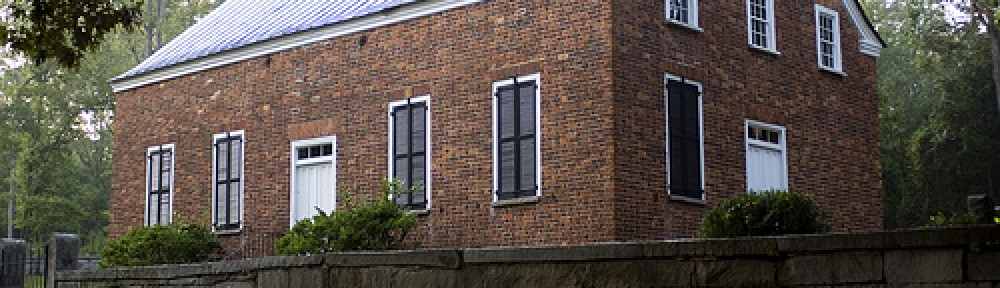
Join us this Lord’s Day, September 13, as we examine Jeremiah 26 and consider the Jeremiah’s response to the cancel-culture of his day. We meet on the square in Pottsville, right next to historic Potts’ Inn at 10:30 am for worship. Get directions here or contact us for more info. Or join us on Facebook Live @PottsvilleARP

