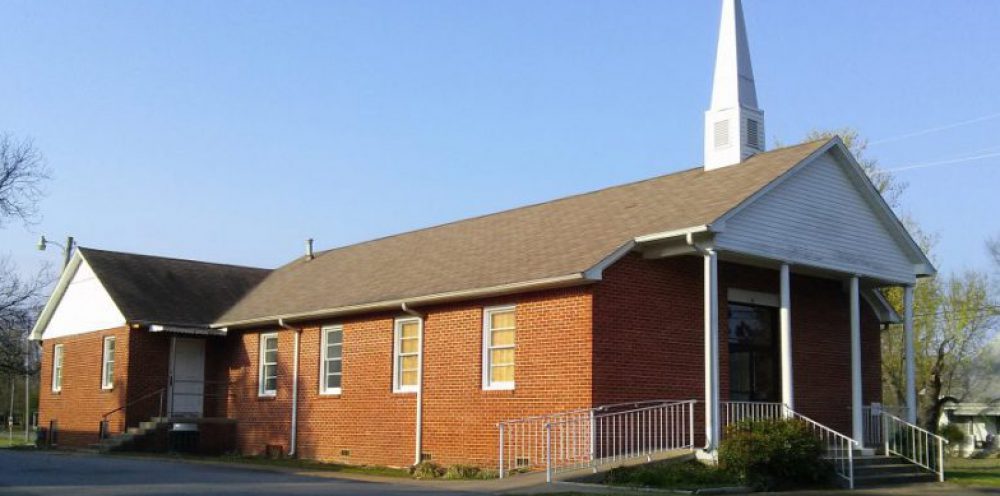
Mark’s account of Jesus’ baptism and temptation leaves us with lots of questions. Why was Jesus baptized? How was he tempted? Join us as we examine Mark 1:9-13 and consider how Jesus’ baptism and temptation prepare us to understand what he came to do.
Tag Archives: Pottsville
Thy Kingdom Come
The most rigorous theological exams are given by five-year-olds from the back seat of the car. While we are busy navigating traffic and directions, our children are staring out at the passing world, pondering deep mysteries. They are not interested in subtlety. Only clarity. “Where is heaven?” “How do people get there?” “Can we go and visit grandpa?” And these are but the merest sampling.
Unfortunately, our theology too often lives only in abstraction. But children demand a theology that lives in time, space, and daily life. When Jesus’ disciples tried to shoo children away, he rebuked them sharply. “Let the children come to me, and do not hinder them, for to such belongs the kingdom of God. Truly, I say to you, whoever does not receive the kingdom of God like a child shall not enter it.”
Children understand. The Kingdom of God must be a real, tangible realm. Not just an ideal or an idea. Jesus’ preaching is centered on the kingdom of God. It is referenced nearly a hundred times in the Synoptic Gospels, Matthew, Mark, and Luke. Jesus’ first sermon was about the Kingdom of God. Warning and inviting his hearers that it is near. And we are taught to pray, “Thy Kingdom come, thy will be done on earth, as it is in heaven.”
But where is it? And what is it, exactly? The Bible speaks much about the kingdom. It is near. It is not of this world. It is within us. It has citizens. Not everyone will enter it. Unless you are “born from above you cannot even see it.” Old Testament saints, such as Abraham, Isaac, and Jacob have entered it. It grows like leavening bread and mustard plants. The gospel is called the “Gospel of the Kingdom.” It is called both the kingdom of God and the kingdom of Heaven. It is the “kingdom of the beloved Son.” It is like a great treasure, that when a man finds it, he will give up everything to possess it. Other kingdoms cannot encroach upon it. “The kingdoms of the world will become the kingdom of our Lord and of his Christ, and he shall reign forever.”
But what it is? And where is it? The people of Jesus’ day were obsessed with the idea that the Kingdom of God was a political and national kingdom. They hoped for a kingdom with geographic borders and nationalistic and ethnic identity. And frankly, many people today believe the same thing. But, as Jesus told Pilate, “[his] kingdom is not of this world.” Yet this does not mean it is ethereal or abstract. It has a real, mighty King who has come to bind the strong-man and plunder his real kingdom to bring glorious liberty to the real prisoners of darkness.
And so, the imprisonment of John by a capricious, earthly, petty tyrant is not the end of budding kingdom of God. But just the beginning. Jesus comes at this moment proclaiming the gospel of God, and saying, “The time is fulfilled, and the kingdom of God is at hand; repent and believe in the gospel.” And in this opening sermon and the calling of his first disciples, we learn simple lessons about the kingdom. What it is. Where it is. And how we enter it. Lessons any five-year-old can understand.
Join us as we examine Mark 1:14-20 and consider the kingdom of God. Where is it? What is it? And how can we enter it? We meet Sundays at 10:30 am on the square in Pottsville, Arkansas right next to historic Potts’ Inn for worship. Get directions here or contact us for more info. Or join us on Facebook Live @PottsvilleARP or YouTube.
Explosive
A war zone! That’s what it sounded like. I was totally unprepared for the explosive culture shock of an Arkansas Fourth of July. To say that Arkansans love their fireworks would be a gross understatement. As a boy, growing up in Georgia, fireworks were illegal. You had to slip across the Alabama line to acquire them from some shady operation whose entire ad budget was sunk into garish billboards. There were no New Years’ blasts. And if you wanted fireworks on the Fourth you had to battle the crowds at a Braves’ game or on the highways and byways around Stone Mountain Park.
My first Arkansas Fourth was raucous. To a man, my neighbors all put on commercial grade pyrotechnics. And the barrage ran into the wee hours. Our dog Phoebe went into hiding and did not come out for days. Welcome to the Shivaree culture! Of course we have civic fireworks shows. Many Arkansas towns, large and small, boast a large budget line item for Fourth of July Fireworks. The displays are often quite spectacular, augmented prior to dark by the pyrotechnic contributions of dozens of local residents.
The display usually starts with a single mortar, shot high above the crowd, exploding into magnificent fiery glory to the delight and terror of small children. Quickly the bombardment escalates with red, blue, green, purple and bright white. Fizzlers and sizzlers, tracers and circlets, fiery fountains, and massive umbrella shaped fireworks, reigning ash and sparks on the gathered populace.
The fiery fury builds until at long last there is the grand finale of every conceivable type and color, fired in a volley of shock and awe. Emotions are stirred. The young are overwhelmed by sight and sound, the old by remembrance of friends and family who gave the last full measure of devotion under lethal barrages in foreign fields. An Arkansas Fourth is an inescapable, explosive reminder of what freedom costs.
The Gospel of Mark begins in an explosive fashion. Mark takes little time setting the scene or developing characters. There are no birth narratives like we find in Luke’s gospel. No genealogy, angelic pronouncement, or kingly line is recounted. Both John and Jesus appear abruptly, John as the forerunner and Jesus as the Mighty One. Every account is introduced with words like “immediately” or “straightway.” Mark’s is the ‘action gospel.’ Probably written to a principally Gentile audience, representing the apostolic witness of Peter, Mark moves quickly to ask three questions. Who is Jesus? What did He come to do? What is our response?
In the very first verse, Jesus is immediately set forth as the Savior, God’s appointed and anointed Messiah, and God’s own Son, fully God and fully man. The next passage introduces John the Baptist who comes to prepare us to see and believe who Jesus is and what he has done. Then without fanfare, Jesus, the Mighty One appears. As he comes to be baptized by John and tempted by Satan, Mark gives us a thesis statement of Jesus’ saving work; his passive and active obedience that delivers us from the dominion of darkness and destroys the works of the devil.
Mark’s account of Jesus’ baptism and temptation is remarkably brief. His brevity leaves us with lots of questions. Why was Jesus baptized? What does it mean for him to be tempted? Join us as we examine Mark 1:9-13 and consider how Jesus’ baptism and temptation prepare us to understand what he came to do. We meet Sundays at 10:30 am on the square in Pottsville, Arkansas right next to historic Potts’ Inn for worship. Get directions here or contact us for more info. Or join us on Facebook Live @PottsvilleARP or YouTube.
08/18/2024 | “Getting Ready” | Mark 1:1-8
Mark’s gospel begins abruptly. With no backstory, John appears in the wilderness baptizing and proclaiming repentance and forgiveness of sin. Here is a new thing in an old package. Something big is coming. Everything is changing. How can we prepare? Join us as we examine Mark 1 and consider the preparations God makes for us to begin a new and remarkable life.
08/11/2024 | “Beginnings” | Mark 1:1
New beginnings offer opportunity, but also ask hard questions. Mark’s gospel begins with the word ‘beginning.’ And with that word, Mark immediately confronts us with questions about Jesus. Who is he? What did he come to do? And what is our response? Join us as we examine Mark 1:1 and consider the implications for us of “the beginning of the gospel of Jesus Christ, the Son of God.”
Moving Day
Inca Court was a utopian outpost on the frontier of a dystopian suburbia. The small suburban Atlanta street where I grew up had only ten houses. Until I left home for college, it was the only home I had ever known. None of the families on our street ever moved in or out. None of the parents in any of those homes ever moved in or out. We never knew the curiosity of new neighbors and never coped with the stress of leaving Inca Court behind. There were no Moving Days on Inca Court. In a mobile society marked by constant transition, Inca Court was sociological anomaly.
My first significant move was phenomenally stressful – filled with logistical angst and existential self-doubt. Was I crazy to leave the familiar, the comfortable, the settled, the influential, the known – even with its problems and challenges – for the uncomfortable, the unsettled, the uninfluential, the unknown?
Life transitions are fertile fields for lush and verdant anxiety, we are never as prepared as we hoped to be but often more prepared than we thought. As followers of Jesus, we have been chosen to live a pilgrim life. For those who like to put down roots, this can be disconcerting. Yet our God is always moving, always at work, even to this very day. To be a follower means to follow – to follow a God who never changes, but often calls us to change, a God who never leaves or forsakes, but often calls us to leave and forsake.
But when do we go, how do we know where to go? Or what will happen one the way? Or when we arrive? What will we leave behind and what will we find ahead? Following God and leaving the familiar is tough. Preparing for a move and a new beginning is complicated. What do we take, what do we leave? Will we have what we need? Will we find meaning, purpose, love, community ahead? Will we be able to hang on to what is behind? We make lists and plans. We close accounts and open new ones. We pack and repack. And we stress.
But the Lord does not simply push us out of the nest to find our own way. Nor does he send us unaccompanied. The Lord promises to go with us and provide us with direction, encouragement, and provision for the journey. Our active preparation is, in truth, a reaction to his gracious preparation. When the Lord calls us to start a new life, he has already provided for us. Before our first list is made or our first mile is traveled, he ordained all our days before one of them comes to be This is true of all our new starts whether vocational, geographic, situational, relational, or spiritual.
The call to faith is not a call to work harder to manufacture faith. Nor are we to root around to find faith somewhere inside ourselves. No! Faith is a gift the Lord gives us to prepare us for all the grace that faith unfolds. To be sure we must respond to God’s gracious initiative. But even the preparation to respond is God’s enabling work of grace.
Mark’s gospel does not begin with a genealogy or Jesus’ birth story. It begins with the sudden and dramatic appearance of John the Baptist. Without explanation or backstory, John appears in the wilderness to “prepare the way of the Lord.” He is baptizing and proclaiming repentance and forgiveness of sin. Here is a new thing in an old medium. Something big is coming. Everything is changing. Not just then. But now, today. How do we get ready?
Our first instinct is to focus on where to begin, what we need to do. And anxiety begins to grow. But Mark shows us that God does all the hard work of preparation and provision. He calls us simply to respond. Join us as we examine Mark 1 and consider the preparations God makes for us to begin a new and remarkable life.
We meet Sundays at 10:30 am on the square in Pottsville, Arkansas right next to historic Potts’ Inn for worship. Get directions here or contact us for more info. Or join us on Facebook Live @PottsvilleARP or YouTube.
Beginnings
Parents long for it. Children are not so sure. And teachers sometimes dread it. The beginning of the academic year, like all beginnings, evokes a spectrum of emotion. Excitement and anxiety. Eagerness and dread of change. Ambition and self-doubt. Emotional energy and exhaustion. New beginnings place us everywhere on this spectrum. What was known and sure is now confronted by what is unknown and unsure.
At my high school the first day of each new academic year was imminently predictable. Every class would review two things; the school discipline handbook and the course syllabus. The syllabus was the touchstone of my anxiety. Confident that my future happiness was indexed immutably to my GPA, I was both an avid and anxious student. And the new course syllabus loomed as a threatening question mark to my future joy.
Would this class be my undoing? Unmask me as a hack, a fraud? In my anxious world, the first day of class was a credibility reset. Previous accomplishment was simply academic history. Only my present now mattered. Was I up to it? What would this new beginning mean for me? How would I respond? And how would this class affect my future? Beginnings are like that. They offer boundless opportunities, but they also ask hard questions. Who am I? What will I experience? And how will I respond?
These are the same questions that confront us when we encounter Jesus as he is revealed and offered to us in the gospel. The narratives of Jesus’ earthly ministry are often called ‘gospels.’ The word gospel comes from an Old English word that means “glad tidings” or “good news.” The story of Jesus is the good news promised throughout the Old Testament and unfolded throughout the New.
The New Testament begins with four books – Matthew, Mark, Luke, and John – that we call ‘The Gospels.’ They are not biographies, but stories of Jesus’ earthly life and work that answer important questions. The designation of these books as Gospels is probably drawn from the first verse of Mark which reads, “The beginning of the gospel of Jesus Christ, the Son of God.”
But the very first word of Mark is the word, “beginning.” And like beginnings in our lives, the Gospel of Mark confronts us immediately with critical questions about Jesus and about ourselves. Who is he? What did he come to do? And what is our response? These are the questions Mark’s gospel answers.
Join us as we examine Mark 1:1 and consider the implications for us of “the beginning of the gospel of Jesus Christ, the Son of God.” We meet Sundays at 10:30 am on the square in Pottsville, Arkansas right next to historic Potts’ Inn for worship. Get directions here or contact us for more info. Or join us on Facebook Live @PottsvilleARP or YouTube.
07/28/2024 | “The Sabbatical” | Leviticus 25:1-22
How are you resting? This is every counselor’s question. Are you resting? Really resting? Have you learned to lay aside the grip of the curse, embrace the rest of worship, fellowship, and growth, and trust God to provide both in labor as rest? Listen as we examine Leviticus 25 and consider God’s instruction for the Sabbatical year and the year of Jubilee.
07/21/2024 | “Marking Time” | Leviticus 23:1-44
Is time your tyrant? Or joyful reminder of God’s grace? Does the fleeting of time and the acceleration of years make you anxious? Or expectant? Listen as we examine Leviticus 23 and consider how the OT Feasts teach us to live thankfully and expectantly.
07/14/2024 | “The Beauty of Holiness” | Leviticus 19:1-37
Holiness! What does the word evoke? Impossible demands? Hypocrisy? Nit-picking moralism? Or beauty, love, community, and grace? The Bible teaches that holiness is a gracious gift that teaches us to love God, love neighbors, and love strangers. Join us as we examine Leviticus 19 and consider the gift of holiness.