Leviticus 14 commands ritual, washings, & sacrifices to pronounce lepers clean. But none of this actually makes a leper clean. It merely points to the Lord’s gracious healing. And declares to the community that God heals, God restores, God cleanses. Listen as we examine Leviticus 14 and consider the true power of God’s appointed means of grace and why it is important that we be both spiritual and religious.
Tag Archives: Pottsville
05/19/2024 | “Contact Precautions” | Leviticus 13:1-59
Infectious disease turns neighbors into threats. And fear makes others “unclean.” Contagion, real or perceived, always threatens fellowship. “Jesus touched the leper.” But should we? Doesn’t Leviticus 13 teach us to keep our distance? Or does it? Join us as we examine Leviticus 13 and consider what endangers our fellowship with God and others far more than leprosy.
05/12/2024 | “Dirty Jobs” | Leviticus 12:1-8
Juxtaposed with warnings about the impurity of dead things, Leviticus 12 declares childbirth defiling. Surely children are innocent, pure, unstained. Or are they? Leviticus 12 reveals a terrible curse, but an even more potent deliverance. Join us as we examine the purity laws regarding childbirth and see how they reveal hope, mercy, grace, and salvation through Jesus.
Care Instructions
It is proverbial that ‘a picture is worth a thousand words.’ And while no one can deny the power of illustration, a picture without a word to explain it is worthless. Words have a level of precision that the ambiguity of pictures can never attain. We call pictures, illustrations, for just that reason. They adorn or clarify words, but never replace them – a fact lost on the author/illustrators of instruction manuals. Words have been replaced with undecipherable instructo-glyphs. Yet no decoder ring or Rosetta Stone can be found in the packaging.
Pictographic laundry care labels are equally mysterious, especially for men, who already struggle with the basic idea that more than one load is ever needed. Left to our own devices, all our clothes would be two sizes too small and a dingy, grey shade of pink. Men are by nature insensible to the significance of laundry care.
But any man who has loved and lived with a woman recognizes the importance of making this important. You only get one, or maybe two, chances at shrinking your wife’s perfect fitting top before you tempt her to keep a record of wrongs. So men, take time to learn the laundro-glyphic arts and treat the sorting and laundering of clothes with utmost care. Because how you care for your wife’s laundry is directly related to your care for your wife.
This principle has an important analog in spiritual life as well. Because as complicated as laundering our clothes may be, we are often most confused about the cleansing of our souls. For all its simplicity, we often over-complicate the gospel in our anxiety about our condition before the Lord. We impute the power of cleansing to ritual and pious works, rather than the gracious initiative of God.
The Reformers spilled considerable ink clarifying that means of grace, the word, worship, sacraments, and prayer are effective only when faith is operative. A faith given by the Holy Spirit in effectual calling. Not a faith produced mechanically by unaided ritual or human understanding. John Calvin and Henrich Bullinger spent a decade debating the efficacy of the means of grace. Bullinger was concerned not to attribute to any creaturely elements or actions what originated only from the work of the Holy Spirit. And Calvin was concerned not to minimize the significance of the ordinary means of grace appointed for diligent use by Christians.
We can feel this same tension in the rituals and sacrifices outlined in Leviticus. But Leviticus 14 brings clarity to the relationship between means of grace and spiritual cleansing. The spectrum of ritually defiling skin diseases was devastating. When someone was declared ‘unclean’ they entered a life of grief and isolation. The priestly instructions in Leviticus 13 dealt only with diagnosis, not treatment. No cure is offered. No plan of care defined. No therapy recommended. No medicine prescribed. The leper is offered no therapeutic hope.
Then Leviticus 14 outlines the response of sufferer, priest, and community to God’s gracious healing of the leper. Ritual, washings, and sacrifices are commanded to declare ritual purity of the cleansed leper. But none of these are the source of the cleansing. They are reflexive. They pointed to a God’s grace. They declared to the community that God heals, God restores, God cleanses. And they removed any barrier to religious or social acceptance for the one cleansed.
In all the discussion of birds, cedarwood, scarlet yarn, and hyssop it would be easy to make too much of the ritual. To think that it, along with the washings and the sacrifices are some magical, mechanical cleansing process. But cleansing only ever comes by the grace of God. All the means of grace that attend it, are in one way or another reflexive. They are given to celebrate and instruct us in the gracious work of a gracious God. To express faith in promises made and promises kept.
This week we conclude our examination of ‘ritually defiling skin disorders’ with the instructions from Leviticus 14 to the priests, the sufferer, and the community about how to respond when a leper is healed. And we see how ritual, washings, and sacrifices declare the gracious work of God that heals, restores, and protects the sufferer. And by way of type and antitype, we learn that God brings healing, restoration, and protection from an even more infectious, isolating, and incurable condition, our own sin.
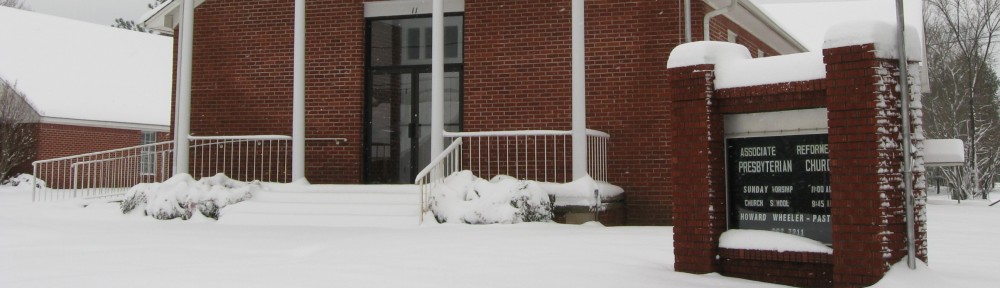
Join us as we examine Leviticus 14 and consider the true power of God’s appointed means of grace and why it is important that we be both spiritual and religious. We meet on the square in Pottsville, Arkansas right next to historic Potts’ Inn for worship. Get directions here or contact us for more info. Or join us on Facebook Live @PottsvilleARP or YouTube.
Contact Precautions
“Jesus touched the leper!” I kept repeating that to myself. The visit began normally enough. I confirmed the address, collected my computer and my Bible and knocked on Kevin’s door. But after that first knock everything went south. Kevin’s partner answered, frantic, wild-eyed. “He’s bleeding everywhere,” he screamed and led me back to a chaotic scene in the chaotic bedroom of a chaotic life. Kevin was terminal. And the effects of his long illness had ravaged his body. And to make things worse, he also had a variety of other communicable pathogenic conditions, including Hepatitis C.
Hep C is a bloodborne pathogen. And there was blood everywhere. I had arrived without gloves, without gown, without mask, without slippers. After all, I was the Chaplain. I was not there for personal care or nursing assessment. But that day, I sat and held the bloodied hand of a bloodied man and prayed and read scripture, covered in his disease. And God reminded me that Jesus touched the leper.
We find this remarkable story in the opening chapter of the Gospel of Mark.
And he said to them, “Let us go on to the next towns, that I may preach there also, for that is why I came out.” And he went throughout all Galilee, preaching in their synagogues and casting out demons.
And a leper came to him, imploring him, and kneeling said to him, “If you will, you can make me clean.” Moved with pity, he stretched out his hand and touched him and said to him, “I will; be clean.” And immediately the leprosy left him, and he was made clean. And Jesus sternly charged him and sent him away at once, and said to him, “See that you say nothing to anyone, but go, show yourself to the priest and offer for your cleansing what Moses commanded, for a proof to them.” But he went out and began to talk freely about it, and to spread the news, so that Jesus could no longer openly enter a town, but was out in desolate places, and people were coming to him from every quarter. Mark 1:38-45
The Lord had brought me to that moment at Kevin’s bedside. To say I was anxious is an understatement. Following the visit, my supervisor immediately sent me to the OSHA doctor. He examined me for any cut, any small wound, any bloodborne pathway through which dread Hep C might enter. My hypochondria was raging. And with good reason. But whatever came of this, the Lord who divinely ordained and scheduled my visit reminded me that in that moment Kevin’s comfort was more important than mine and that He would exhibit his grace to me.
When people are infectious, it makes us leery. Covid turned neighbors into threats. We distanced. We isolated. We locked down. We donned PPE, masks, gowns, gloves. We hoarded Covid tests and got vaccinated, often under duress. And we got boosted and boosted again. And again. When someone is infectious, we “double the bubble.” Fear makes others “unclean.” Contagion, real or perceived, always threatens fellowship and increases fear. Yes, “Jesus touched the leper.” But should we?
After all, doesn’t Leviticus 13 warn us to keep our distance? Instruct us to assess and hold the contagious as those who are “out of fellowship?” What are we, in our contemporary preoccupation with ‘contact precautions,’ to make of God’s instruction to his ancient people about caring for those suffering with infectious disease? How do these ceremonial laws about ritual purity and dermatology teach, rebuke, correct, or train believers on this side of the cross? Are they completely obsolete? Or do these laws, like all the ceremony of Israel, speak beautifully of Christ?
Join us as we examine Leviticus 13 and consider what endangers our fellowship with God and others far more than leprosy. We meet on the square in Pottsville, Arkansas right next to historic Potts’ Inn for worship. Get directions here or contact us for more info. Or join us on Facebook Live @PottsvilleARP or YouTube.
05/05/2024 | “Making Distinctions” | Leviticus 11:1-47
What makes food clean or unclean? How do OT dietary laws teach, reprove, correct & train modern Christians in righteousness? Can we ignore them? What sweet savor of Christ do we to find in these warnings against pig roasts & shrimp on the barbie?
Join us as we examine Leviticus 11 and consider the dietary laws of Israel and the distinctions we are called to make as Christians called to be “a royal priesthood, a holy nation, a people for [Christ’s] own possession, that you may proclaim the excellencies of him who called you out of darkness into his marvelous light.”
04/28/2024 | “Warning Label” | Leviticus 10:1-20
Worship is beautiful and glorious, but it can be deadly. Drawing near to God in our own way or on our own merit brings judgement. So, worship comes with a warning label. Leviticus 10 is a tragic but powerful reminder to worship God only as he commanded. Join us as we examine Leviticus 10 and consider the warning label God provides for our worship.
Dirty Jobs
Before Mike Rowe, there was J. R. J. R. was a janitor during my formative years at Rowland Elementary. While children are often not sympathetic toward adults, I always admired J. R. And I felt sorry for him. He had the dirtiest job imaginable. And while I am sure his usual duties included vast unpleasantness, it was the incidental things that were particularly filthy. The overflowing toilets, the projectile vomiting, not to mention the occasional dead varmint removal. J. R. made dirty things clean. Whenever you heard his name over the intercom, you knew that some grossness would soon be dealt with.
But you never heard J. R. grumble or complain. He was a quiet man with a sweet spirit. Though poorly remunerated for the job he did, he was unflappable, indefatigable. His gentle spirit caught my attention and his sense of duty my imagination. J. R. did hard things. Before Mike Rowe gained fame for exposing us to dirty jobs, there was J. R. who routinely, quietly, and discretely did things that would make Mike Rowe shudder.
J. R.’s trials were child’s play, however, compared to the dirty jobs parents face every day, especially mothers. Dirty jobs that bring redemption, love, and grace. Though rarely observed or remembered, and certainly never celebrated, the dirty work of raising children in the nurture and admonition of the Lord pays eternal dividends. For the Christian, parenting is discipleship. And every dirty job, every painful discipline, every struggle with our own sin while teaching, rebuking, correcting, and training sinful children prepares the soil to receives the Word and produce a harvest.
At first glance Leviticus 12 seems out of place. Up to this point the sacrifices and the priesthood have all been about atonement for sin. Next come the ceremonial laws sometimes called the ‘purity laws.’ These explain what it means to pursue holiness in daily life. And how to avoid unclean things and identify clean things. Juxtaposed with warnings about the impurity of dead things, Leviticus 12 declares childbirth defiling.
Aren’t children pure, innocent, and unstained? What is sweeter than the birth of a child? And the parental bliss of our first few months with baby carries us through sleepless nights, diaper changes, and relentless feeding schedules. And then they begin to talk. We thrill to hear MaMaMaMa and then DaDaDaDa. But soon enough we begin to hear something else, “No!”
It does not take long to realize that our children are willful rebels and sinners. From the womb they have been in “an estate of sin and misery… consisting of the guilt of Adam’s first sin, the want of original righteousness, and the corruption of his whole nature, which is commonly called original sin; together with all actual transgressions which will shortly proceed from it.”
And as our Westminster Shorter Catechism laments, the misery of this condition is that, apart from God’s grace in Christ, our beloved children have “lost communion with God, are under His wrath and curse, and so made liable to all miseries in this life, to death itself, and to the pains of hell forever.”
The impurity that Leviticus 12 describes in the wake of a baby’s birth arises from the estate of sin and misery into which we are all born. And in which we will remain unless there is a new birth through faith in Christ. But Leviticus 12 does not simply point out that we are “by nature objects of wrath.” For the greater emphasis is what God has provided. In a sense, the purity rituals of Leviticus 12 form an early answer to Question 20 in the Westminster Shorter Catechism.
Question: Did God leave all mankind to perish in the estate of sin and misery?
Answer: God having, out of His mere good pleasure, from all eternity, elected some to everlasting life, did enter into a covenant of grace, to deliver them out of the estate of sin and misery, and to bring them into an estate of salvation by a redeemer.
And here, in the instructions given to new mothers, we see the beauty of Christ held out as “the only redeemer of God’s elect.” Join us as we examine Leviticus 12 and consider how the purity laws regarding childbirth reveal hope, mercy, grace, and salvation through Jesus. We meet on the square in Pottsville, Arkansas right next to historic Potts’ Inn for worship. Get directions here or contact us for more info. Or join us on Facebook Live @PottsvilleARP or YouTube.
Picky Eater
Mac-n-cheese and ketchup! My young cousin ate little else in his early life. I was sure this was permissive parenting. Then I had my own olive shoot who ate only things in the yellow food group. While we did not indulge ‘picky eaters’ the lad would pick at all else for days until something crunchy and yellow would appear. The pediatrician assured us that no child will starve if food is available. And in this we found some solace.
Then there were the mealtime scriptures. Passages such as Paul’s admonition to the Corinthians, “eat whatever is before you without raising any question on the ground of conscience.” And 1 Timothy 4 where Paul warns Timothy about asceticism and “abstinence from foods that God created to be received with thanksgiving by those who believe and know the truth. For everything created by God is good, and nothing is to be rejected if it is received with thanksgiving.” Another favorite was “whether you eat or drink, or whatever you do, do all to the glory of God.”
Seems clear! God called us not to be picky eaters. Except, of course, when love for the conscience of a brothers and sister requires temporary veganism. But knowing my lad was a capable scholar, I waited anxiously for certain other scriptures to enter the conversation. But Dad, “what about Leviticus? Why are some foods ok and others not? Why did God command some meat, seafood, and poultry to be eaten? And forbid so many others? Dad, doesn’t the Bible say not to eat those bacon wrapped shrimp?” Didn’t God command Israel to be picky eaters?
This is always a tricky one for expositors. Theologically, we have a tidy tripartite view of the law as moral, ceremonial, and civil. Our confession of faith in Chapter 19, entitled, Of the Law of God, describes the demands of each category on contemporary Christians this way.
- Besides this law, commonly called moral, God was pleased to give to the people of Israel, as a church under age, ceremonial laws, containing several typical ordinances, partly of worship, prefiguring Christ, His graces, actions, sufferings, and benefits; and partly holding forth divers instructions of moral duties. All which ceremonial laws are now abrogated under the New Testament.
- To them also, as a body politic, He gave sundry judicial laws, which expired together with the state of that people, not obliging any other, now, further than the general equity thereof may require.
- The moral law doth forever bind all, as well justified persons as others, to the obedience thereof; and that not only in regard of the matter contained in it, but also in respect of the authority of God the Creator who gave it. Neither doth Christ in the gospel any way dissolve, but much strengthen, this obligation.
The food laws of ancient Israel, given in Leviticus 11 and Deuteronomy 14, are connected to the category of ceremonial law, and yet, they are concerned with the ritual condition of members of the community and not the officiation of worship. They are a call to reflexive holiness and obedience in response to the grace of God. Conditions that, in and of themselves, have not been “abrogated under the New Testament.” And we must acknowledge that the ceremonial laws fulfilled by Christ’s finished work have continuing value for us as “Scripture … breathed out by God and profitable for teaching, for reproof, for correction, and for training in righteousness.”
But what is the continuing application of these dietary laws? What was their value for our forefathers in Israel? What makes some foods clean and others unclean? How does Leviticus 11 teach, reprove, correct, and train us in righteousness? What obedience is required for us today? What sweet savor of Christ are we to find in these ancient warnings against pig roasts and shrimp on the barbie?
Join us as we examine Leviticus 11 and consider the dietary laws of Israel and the distinctions we are called to make as Christians called to be “a royal priesthood, a holy nation, a people for [Christ’s] own possession, that you may proclaim the excellencies of him who called you out of darkness into his marvelous light.” We meet on the square in Pottsville, Arkansas right next to historic Potts’ Inn for worship. Get directions here or contact us for more info. Or join us on Facebook Live @PottsvilleARP or YouTube.
04/21/2024 | “On the Job Training” | Leviticus 9
Is your worship glorious? Or tedious? Does worship shape the pattern of your life in Christ? Or is it just a Sunday thing? Leviticus 9 reveals a trajectory for worship. A trajectory God commands for corporate, family, and private worship. And for life! Join us as we examine Leviticus 9 and discover the trajectory of worship God has given us.

