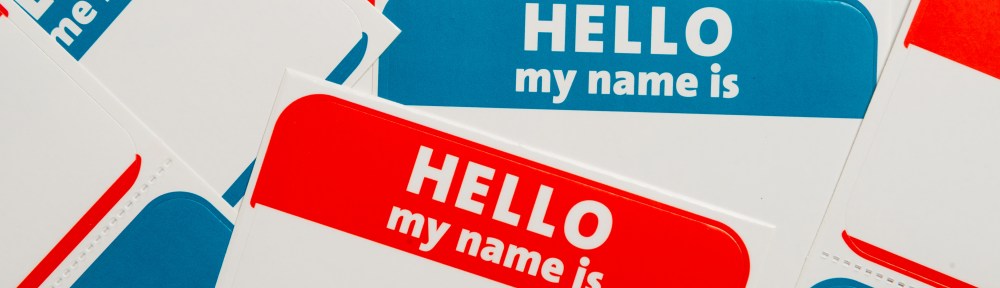
Some people don’t stand a chance. Some names are just not easy to remember. Perhaps they are uncommon or have an unexpected pronunciation. Or worse yet, maybe they are middle names. ‘Middle-namers’ are doomed to the fate of David Allan Coe’s classic country lament, “You Never Even Called Me By My Name.” Constantly mistaken for other country musicians, Coe laments.
“Well, I’ve heard my name a few times in your phone book.
And I’ve seen it on signs where I’ve played
But the only time I know I’ll hear “David Allan Coe”
Is when Jesus has his final judgment day.”
And for me I have the double curse of going by a middle name that is unfamiliar to modern man. When telemarketers and ‘well-meaners’ aren’t calling me William or Bill, they invariable call me ‘Harold’ or ‘Hal’ and surprisingly even, ‘Brian.’ But I rarely hear ‘Howard.’ While I get it, it still leaves me feeling a bit unseen. Everyone wants to be called by their name. Recognized, Seen.
A name is more than a label. It forms the core of your identity. When others use your name, it is profoundly meaningful. Your name may come from your family or character, but ultimately your name grows to reflect your family and your character. It stands for who you are. It becomes your logo.
Good or bad your name forms an association. New parents may love a name for their baby but choose not to use it because ‘they knew someone with that name.’ Wise King Solomon noted that a “good name is to be chosen more than great riches… and a good name is better than precious ointment.”
Names are important. And no name is more important than the name of God. And no name is more unused and misused than his name. Like each of us, his name is much more than the word we used to call him or refer to him. The Westminster Larger Catechism notes that in the Bible, God’s Name refers to “His titles, attributes, ordinances, the Word, sacraments, prayer, oaths, vows, lots, His works, and whatsoever else there is whereby He makes Himself known.”
When we consider this list of all the ways whereby God makes himself known, hallowing his name and not taking it in vain becomes a significant concern for the man whose main purpose is to glorify and enjoy this God. The Third Commandment, “You shall not take the name of the Lord your God in vain, for the Lord will not hold him guiltless who takes his name in vain” is often overlooked in importance when discussing the Ten Commandments. Or relegated to a caution against cussing like a sailor. But just as God’s name is far more than a title, to “lift up his name to emptiness” is a most egregious affront to his glory and betrays rank unbelief.
The Third Commandment is foundational to the formation of our attitude toward our God. Far from being tucked in between warnings about idolatry and sabbath-breaking, the Third Commandment calls us to love the Lord our God with all our heart and mind. And the warning annexed to it is no small matter. “The Lord will not hold him guiltless who takes his name in vain.”
Our guilt in taking God’s name in vain cannot be hidden. It will not go undetected or unjudged. We live our lives coram Deo, before the face of God. He knows the thoughts and intentions of our heart. Our sweet words and pious deeds cannot conceal what is in our heart or mind. As God noted of his people in Isaiah’s day.
[T]his people draw near with their mouth
Isaiah 29:13
and honor me with their lips,
while their hearts are far from me.
So, what does it mean to hallow, and not lift up to vanity, all of God’s “titles, attributes, ordinances, the Word, sacraments, prayer, oaths, vows, lots, His works, and whatsoever else there is whereby He makes Himself known?” Join us as we examine Exodus 20:7 and consider what it means to keep and to break the Third Commandment. We meet on the square in Pottsville, right next to historic Potts’ Inn at 10:30 am for worship. Get directions here or contact us for more info. Or join us on Facebook Live @PottsvilleARP or YouTube.
 Pottsville Associate Reformed Presbyterian Church