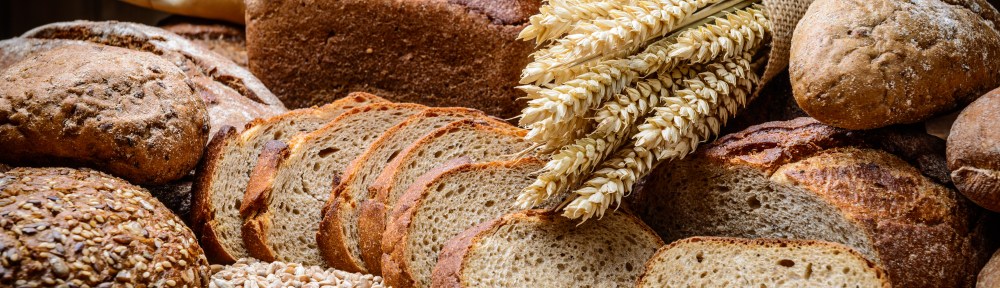
Staff of life or anathema? For thousands of years bread has been a non-negotiable, the staple of every meal in virtually every culture. Growing up, a meal without biscuits and meat was not a real meal. But now, bread is an outlaw at our tables. Banished from our diets and our mealtimes.
In our modern agriconomy, yield, not genetic integrity has become the core metric. Ancient grains have sustained life and promoted health and nourishment since the dawn of time. But are now supplanted by weapons-grade gluten that wages war on our bodies and immune systems. And beyond that skyrocketing carb consumption and expanding girth has pushed us to ‘go Keto.’
Bread, once offered at every meal, has now become the enemy. But our war on bread comes at a cost. A cost to our health, to our pleasure, to our fellowship. And not insignificantly, it comes at a cost to our theology. Bread is a big deal in the Scripture. It is the ubiquitous agency of worship and fellowship in the story of redemption. It is central to hospitality and celebration. It is emblematic of God’s daily providence. Yet it also represents a motive for workaholism, theft, and apostasy. And last, but not least it represents the redemptive work of Christ and unity in his body, the church.
Melchizedek met Abraham with bread and wine. God gave bread every day for 40 years to feed the people in the wilderness. On feast days, the people of Israel waved fresh loaves before the Lord as a fellowship offering. The widow of Zarephath experienced God’s daily faithfulness through inexhaustible provision of bread during a drought. The Psalmist warns not to work for the bread of anxious toil. In the Proverbs, Agur son of Jakeh warns us to pray for daily bread so that we might not “be full and deny [God] or … be poor and steal.” The Lord reinforced this in the Lord’s prayer where we are taught to pray “Give us this day our daily bread.”
Jesus was born in Bethlehem, “the house of bread.” His betrayal was sealed by sharing bread with Judas Iscariot. And feeding five thousand men and their families with bread precipitated the crisis that moved Jesus from populist hero to theological pariah. As that crowd followed him around the lake to make him their King by force, he startled them with his response.
Jesus answered them, “Truly, truly, I say to you, you are seeking me, not because you saw signs, but because you ate your fill of the loaves. Do not work for the food that perishes, but for the food that endures to eternal life, which the Son of Man will give to you. For on him God the Father has set his seal…” Jesus said to them, “I am the bread of life; whoever comes to me shall not hunger, and whoever believes in me shall never thirst….
So the Jews grumbled about him, because he said, “I am the bread that came down from heaven.” They said, “Is not this Jesus, the son of Joseph, whose father and mother we know? How does he now say, ‘I have come down from heaven’?” When many of his disciples heard it, they said, “This is a hard saying; who can listen to it?” After this many of his disciples turned back and no longer walked with him.
John 6:26-27, 35, 41-42, 60
Jesus shared bread with his disciples at the Last Supper and continues to share it with us at the Lord’s Supper as a sign and seal of his broken body in his saving work of redemption. And Paul notes that the loaf of bread we break in this supper represents the unity within the Body of Christ.
Bread is a big deal in the Scripture. It is so important that it is provided as one of the abiding symbols in the Tabernacle that reflect true heavenly realities. On the north side of the Holy Place, in front of the veil, God commanded that a table be constructed to display a perpetual offering of the Bread of the Presence. The Kohathite tribe of the Levites baked twelve loaves each week and replaced them every Sabbath. The old loaves would then be eaten by the priests in a Holy place.
This bread was a symbol of God’s promise to provide physical and spiritual nourishment for his people. Just as the ark reflected God’s provision of eternal life, the Bread of the Presence revealed God’s commitment to provide for their physical and spiritual lives here and now. And as Jesus noted in John 6, like everything else in the Tabernacle, the bread prepared the people for the “living bread that came down from heaven.”
Join us as we examine Exodus 25:23-30 and consider God’s instructions for a table in the Tabernacle to present the Bread of the Presence and what this bread means for us. We meet on the square in Pottsville, right next to historic Potts’ Inn at 10:30 am for worship. Get directions here or contact us for more info. Or join us on Facebook Live @PottsvilleARP or YouTube.

