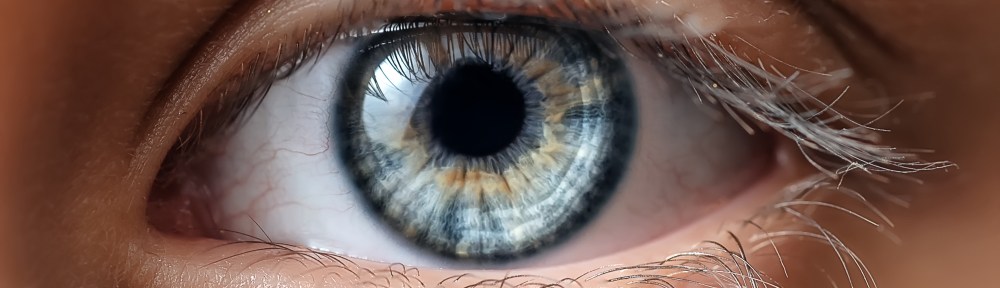
“Don’t blink,” she says. I steel my senses and attempt the impossible. She begins the count to three. But somewhere in the domain of infinite real numbers that exist between two and three she activates the tonometer. A puff of air flattens my cornea and in the twinkling of an eye, my intraocular pressure is measured. But mixed up in the terrifying uncertainty of what would happen and when it would happen, the inevitable occurs. How could I help but blink? After all, it is an involuntary reflex. An instinctive response to stimuli. No matter how hard I try not to blink at the optometrist’s or resist kicking when the GP brings out the rubber hammer, a reflex is irresistible.
Human life depends upon both involuntary and conditioned reflexes. God has wired us with involuntary reflexes such as blinking or sneezing to ensure basic health and survival while conditioned reflexes reflect intentional choices. We train our bodies and our minds to be this and not that, to do this and not that, and to avoid this, but not that. We condition our reflexes to create, achieve, find joy and peace, and avoid pain. But what is the ultimate stimulus for our reflexes? Is it self-love or God’s love? Your life is a response to one or the other. One brings death, the other life. Which describes you?
The God of the Bible takes the initiative. He sees, hears, acts. He reveals himself and saves us from the slavery of sin and death. He brings us to himself and makes covenant with us. A covenant sealed with his own blood. He calls us to be holy as he is holy that we may abide with the one “who loves us and has freed us from our sin.” His inexplicable grace produces an irresistible reflex of gratitude. A reflex that animates us to glorify and enjoy Him and makes us more like Jesus.
For this reason, the Scripture exhorts us continually to train, study, exercise self-control, and “pursue righteousness, godliness, faith, love, steadfastness, gentleness.” God’s great purpose in grace is that we “be conformed to the image of his Son, in order that he might be the firstborn among many brothers.” Our sanctification grows from a reflexive response to the grace of God, sustained by the indwelling work of the Holy Spirit. Paul makes this clear writing to the Philippians, “work out your own salvation with fear and trembling, for it is God who works in you, both to will and to work for his good pleasure.”
This is the remarkable transformation we see at the end of the book of Exodus. The sin of the Golden Calf was indescribably wicked. Everyone was complicit, Aaron, the elders, the Levites, and all the people. Their guilt seemed unforgiveable. Yet, God’s grace is sufficient. He demonstrates his nature as “The Lord, the Lord, a God merciful and gracious, slow to anger, and abounding in steadfast love and faithfulness, keeping steadfast love for thousands, forgiving iniquity and transgression and sin.” Exodus 34:6-7
And in response, we see sinful, rebellious, stiff-necked people transformed into grateful saints, faithfully giving, serving, and following. And so it should with us. The irresistible reflex to God’s grace is unfolding sanctification in our words, thoughts, deeds, desires, intentions, attitudes, and perspective as God reclaims every venue of our total depravity.
The Christian life is a reflex to the grace of God. Grace and gratitude shape our worship, giving, service, and daily life. Scripture reminds us.
Therefore, as you received Christ Jesus the Lord, so walk in him, rooted and built up in him and established in the faith, just as you were taught, abounding in thanksgiving.
Colossians 2:6-7
How are your reflexes? Join us as we examine the people’s response to God’s grace in Exodus 35-40 and how it unfolds in faithful giving, faithful serving, and faithful following. We meet on the square in Pottsville, right next to historic Potts’ Inn at 10:30 am for worship. Get directions here or contact us for more info. Or join us on Facebook Live @PottsvilleARP or YouTube.
 Pottsville Associate Reformed Presbyterian Church