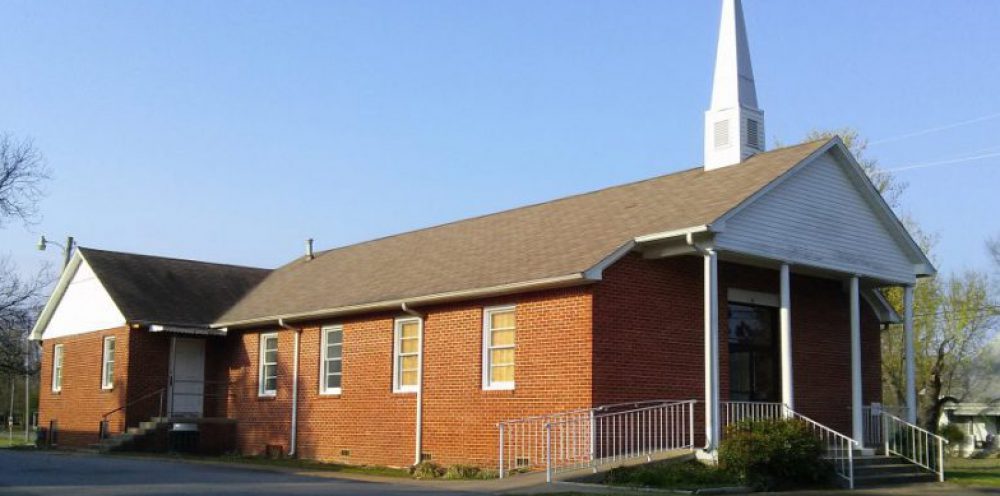
Tailgating is forbidden at work. Access depends upon our credentials. But access to God is never based on our credentials. It requires tailgating Christ through the door. The badge of his obedience & sacrifice is the only credential that allows us in. Join us this week as we examine Exodus 25:9-22 and consider God’s instructions to Moses regarding the Ark of the Covenant and unpack its promises for us.
Tag Archives: Family Integrated Church
Pitching the Tent
The surest way to get rain is to put up a tent. Campers know if you have slept in a tent, you have gotten wet in a tent. Even high dollar tents rarely refuse entry to water. Sometimes this is a problem of design – a rainfly that does not quite cover the edges, where rivulets inevitably flow. Or perhaps a failure of routine maintenance such as proper seam sealing. More commonly, however, getting wet results from a poorly pitched tent.
Modern tents are imminently designed for ease of use. With shock-corded poles, lightweight ripstop nylon shells, dome-shaped structures, guide sleeves and clips for the poles, and buckle-in, self-tightening rainflies, these tents can be erected in minutes. And while ease of use is important, the novice camper soon learns that it is not the most important feature. When the rains come down and the floods rise up, hastily pitched tents often fail to keep us dry.
Our family has been wet in every kind of tent on every type of campsite imaginable. We learned long ago that no matter how easy it is to set up, if we are going to stay dry, we need to add significant amendments. Carefully placed and folded ground tarps, a ginormous tarp to serve as an encompassing second rainfly along with the T-posts and parachute cord required to rig the right shape to drain the water away. These are the basics. The non-negotiables. And worth every additional pound of portage.
Pitching a tent well involves careful thought. And lots of layers. Layers for comfort. Layers for protection. And even layers for concealment. Modern tents come in canary yellow, hunter orange, and sea-foam teal. But the wise camper wants his tent to blend in to provide concealment for protection and aesthetics. Pitching a tent is engineering and artistry. “Pitch in haste and you will repent at leisure.” A poorly pitched tent makes for a poor camping experience, plain and simple.
In Exodus 26, Moses is shown the design for a well-pitched tent. The Lord God promised to dwell among his people. Just as they lived in tents, He would dwell in a magnificent tent. His tent was designed from a heavenly exemplar to teach the people that their ultimate purpose was to dwell with him in heaven not just on earth. And his tent was placed in the center of the camp to remind the people that their lives revolved around him.
And yet, though always visible, most Israelites would never see inside God’s tent. He hosted no open houses. Invited no tours. As one theologian commented, the layers of coverings, the veil at the entrance, and the veil concealing the Holy of Holies and the Ark of the Covenant “would visibly say ‘come in’ and then ‘keep out,’ ‘thus far’ and ‘no further.’
The description of the tabernacle leaves one lasting impression: that of the number of coverings and entrance curtains. Though Israel had this tremendous privilege of the divine presence in their midst, there was to be no doubt that his is the Holy One, and that access to him was no easy matter, even though his palace and temple was right there in the centre of their camp…. The picture is one of limited access. But now this has all changed. ‘We have confidence to enter the Most Holy Place by the blood of Jesus, by a new and living way opened for us through the curtain, that is his body.’ (Hebrews 10:19-20)
John Mackay, Exodus
God’s tent is a marvel of engineering and artistry. Portable but protective. A microcosm of heaven on earth. A place of God’s presence, provision, and promise. A place where God bids us draw near yet warns that our approach requires a mediator. A place whose concealed treasures speak of unseen saving faith in an unseen God. The author of Hebrews puts this together.
But when Christ appeared as a high priest of the good things that have come, then through the greater and more perfect tent (not made with hands, that is, not of this creation) he entered once for all into the holy places, not by means of the blood of goats and calves but by means of his own blood, thus securing an eternal redemption. For if the blood of goats and bulls, and the sprinkling of defiled persons with the ashes of a heifer, sanctify for the purification of the flesh, how much more will the blood of Christ, who through the eternal Spirit offered himself without blemish to God, purify our conscience from dead works to serve the living God. Therefore, he is the mediator of a new covenant, so that those who are called may receive the promised eternal inheritance.
Hebrews 9:11-15
Join us as we examine Exodus 26:1-37 and consider the design, artistry, purpose and promises found in the Tabernacle. We meet on the square in Pottsville, right next to historic Potts’ Inn at 10:30 am for worship. Get directions here or contact us for more info. Or join us on Facebook Live @PottsvilleARP or YouTube.
The Light of Life
Everything changes in the dark. What is familiar and comforting in daytime, becomes sinister and disquieting in the dark of night. Our closet is filled with looming, threatening forms. And the area under our beds, which houses nostalgia by day, becomes a haunt for all manner of unimaginably malevolent beasts at night. Even as an adult, I still sleep with my hands under my body. A holdover from my childhood when I feared any uncovered hand drifting to the edge of the bed would be met by a slimy, cold, deadly grasp.
Darkness brings fear, uncertainty, complication. It is hard to function in the dark. You realize this on your first camping trip. Without a flashlight or headlamp, movement is difficult. Nothing is where you remember it being. The simple becomes complicated. And every squirrel sounds like Bigfoot. We are all scared of the dark. It is a fear we never outgrow.
The language of our distress makes this clear. A trying time is “dark night of the soul.” Depression is a “black hole.” Death is the “valley of the shadow of death.” Quite literally the phrase translated, “shadow of death” in the Bible means “deepest darkness.” A darkness like that of a cave. A darkness so thick that nothing can be seen. A darkness in which you can only grope your way around. A darkness that can be felt. Felt in the deep places of your heart, mind, and soul.
The phrase “deepest darkness” in scripture often describes fear, oppression, and judgment for sin. Hell is described as “outer darkness.” When Nicodemus came to Jesus by night, Jesus compared sin to darkness and salvation to light.
And this is the judgment: the light has come into the world, and people loved the darkness rather than the light because their works were evil. For everyone who does wicked things hates the light and does not come to the light, lest his works should be exposed. But whoever does what is true comes to the light, so that it may be clearly seen that his works have been carried out in God.”
John 3:19-21
And speaking in the Temple, Jesus declared, “I am the light of the world. Whoever follows me will not walk in darkness, but will have the light of life.”
And elsewhere we read.
This is the message we have heard from him and proclaim to you, that God is light, and in him is no darkness at all. If we say we have fellowship with him while we walk in darkness, we lie and do not practice the truth. But if we walk in the light, as he is in the light, we have fellowship with one another, and the blood of Jesus his Son cleanses us from all sin.
1 John 1:5-7
It is not insignificant that the first element of creation is light. God’s first creative order of business is to establish light and dispel darkness. Light brings clarity, light reveals what is true, enlivens, empowers, and reflects and refracts the beauty of all God made. In God’s eternal kingdom there is no darkness at all. As Revelation describes the New Jerusalem as a city of light we read,
And I saw no temple in the city, for its temple is the Lord God, the Almighty and the Lamb. And the city has no need of sun or moon to shine on it, for the glory of God gives it light and its lamp is the Lamb.
Revelation 21:22-23
And in the Tabernacle, God’s temporal representation of this eternal reality he also provides continual light. Significant among its furnishings was the Golden Lampstand. God directed its seven lamps to be lit perpetually, providing light both for the priests as they ministered and for the people as they looked toward God’s tent and saw that his light was always on. As with all the furnishings of the Tabernacle the Lampstand spoke of God’s abiding presence, continual provision, and redemptive plan for those who come to Him.
Light gives life. Life to all created things. And life to our eternal being. In the opening of John’s gospel, the beloved disciple writes of Jesus as the true light.
In him was life, and that life was the light of all mankind… The true light that gives light to everyone was coming into the world. He was in the world, and though the world was made through him, the world did not recognize him. He came to that which was his own, but his own did not receive him. Yet to all who did receive him, to those who believed in his name, he gave the right to become children of God— children born not of natural descent, nor of human decision or a husband’s will, but born of God.
John 1:4, 9-13
Join us as we examine Exodus 25:31-40 and consider the beautiful promises bound up in the Golden Lampstand and the true ‘light of life’ to which it points. We meet on the square in Pottsville, right next to historic Potts’ Inn at 10:30 am for worship. Get directions here or contact us for more info. Or join us on Facebook Live @PottsvilleARP or YouTube.
Believing Prayer
Remarkable faith is often found in the most unremarkable places. Jesus exclaims this in two gospel stories involving those outside God’s covenant people. First, Jesus declares of the centurion who asks healing for his servant, “I tell you, not even in Israel have I found such faith.” And later as Jesus and his disciples vacation at the seaside, a ‘Canaanite woman from that region came out and was crying, ‘Have mercy on me, O Lord, Son of David; my daughter is severely oppressed by a demon.’” Jesus tested her by putting her off, but she persisted and received healing for her daughter.
Jesus, no doubt, shocked his disciples when he “answered [the Canaanite woman], ‘O woman, great is your faith! Be it done for you as you desire.’” A Canaanite? A Gentile dog? No, a woman of great persistence in prayer! Evidence, Jesus says, of a great faith.
Scripture teaches us about the remarkable promise and power of believing prayer.
“And I tell you, ask, and it will be given to you; seek, and you will find; knock, and it will be opened to you. For everyone who asks receives, and the one who seeks finds, and to the one who knocks it will be opened.”
Luke 11:9-10
But also warns us that prayer is no mere talisman.
But let him ask in faith, with no doubting, for the one who doubts is like a wave of the sea that is driven and tossed by the wind.
James 1:6
Even contemporary artist, Jelly Roll, angsts over the tension between itinerant, half-hearted prayer versus faith in the grace of a merciful God in his popular song, “Need a Favor.”
I only talk to God when I need a favor
“Need a Favor,” Jelly Roll,
And I only pray when I ain’t got a prayer
So who … am I, who … am I to expect a savior, oh
If I only talk to God when I need a favor?
But, God, I need a favor!
What does you prayer life look like? Who does your prayer life resemble? Is it more like Jelly Roll or the Canaanite woman? Is your prayer more afterthought than wrestling match? If you had been at Peniel would you have said with duplicitous Jacob, “I will not let you go until you bless me?” Do you let go easily in prayer? Or hold fast in unshakable faith?
Join us as Rev. Bill Holiman leads us to examine Matthew 15:21-28 and consider ‘believing prayer.’ We meet on the square in Pottsville, right next to historic Potts’ Inn at 10:30 am for worship. Get directions here or contact us for more info. Or join us on Facebook Live @PottsvilleARP or YouTube.
Our Daily Bread
Staff of life or anathema? For thousands of years bread has been a non-negotiable, the staple of every meal in virtually every culture. Growing up, a meal without biscuits and meat was not a real meal. But now, bread is an outlaw at our tables. Banished from our diets and our mealtimes.
In our modern agriconomy, yield, not genetic integrity has become the core metric. Ancient grains have sustained life and promoted health and nourishment since the dawn of time. But are now supplanted by weapons-grade gluten that wages war on our bodies and immune systems. And beyond that skyrocketing carb consumption and expanding girth has pushed us to ‘go Keto.’
Bread, once offered at every meal, has now become the enemy. But our war on bread comes at a cost. A cost to our health, to our pleasure, to our fellowship. And not insignificantly, it comes at a cost to our theology. Bread is a big deal in the Scripture. It is the ubiquitous agency of worship and fellowship in the story of redemption. It is central to hospitality and celebration. It is emblematic of God’s daily providence. Yet it also represents a motive for workaholism, theft, and apostasy. And last, but not least it represents the redemptive work of Christ and unity in his body, the church.
Melchizedek met Abraham with bread and wine. God gave bread every day for 40 years to feed the people in the wilderness. On feast days, the people of Israel waved fresh loaves before the Lord as a fellowship offering. The widow of Zarephath experienced God’s daily faithfulness through inexhaustible provision of bread during a drought. The Psalmist warns not to work for the bread of anxious toil. In the Proverbs, Agur son of Jakeh warns us to pray for daily bread so that we might not “be full and deny [God] or … be poor and steal.” The Lord reinforced this in the Lord’s prayer where we are taught to pray “Give us this day our daily bread.”
Jesus was born in Bethlehem, “the house of bread.” His betrayal was sealed by sharing bread with Judas Iscariot. And feeding five thousand men and their families with bread precipitated the crisis that moved Jesus from populist hero to theological pariah. As that crowd followed him around the lake to make him their King by force, he startled them with his response.
Jesus answered them, “Truly, truly, I say to you, you are seeking me, not because you saw signs, but because you ate your fill of the loaves. Do not work for the food that perishes, but for the food that endures to eternal life, which the Son of Man will give to you. For on him God the Father has set his seal…” Jesus said to them, “I am the bread of life; whoever comes to me shall not hunger, and whoever believes in me shall never thirst….
So the Jews grumbled about him, because he said, “I am the bread that came down from heaven.” They said, “Is not this Jesus, the son of Joseph, whose father and mother we know? How does he now say, ‘I have come down from heaven’?” When many of his disciples heard it, they said, “This is a hard saying; who can listen to it?” After this many of his disciples turned back and no longer walked with him.
John 6:26-27, 35, 41-42, 60
Jesus shared bread with his disciples at the Last Supper and continues to share it with us at the Lord’s Supper as a sign and seal of his broken body in his saving work of redemption. And Paul notes that the loaf of bread we break in this supper represents the unity within the Body of Christ.
Bread is a big deal in the Scripture. It is so important that it is provided as one of the abiding symbols in the Tabernacle that reflect true heavenly realities. On the north side of the Holy Place, in front of the veil, God commanded that a table be constructed to display a perpetual offering of the Bread of the Presence. The Kohathite tribe of the Levites baked twelve loaves each week and replaced them every Sabbath. The old loaves would then be eaten by the priests in a Holy place.
This bread was a symbol of God’s promise to provide physical and spiritual nourishment for his people. Just as the ark reflected God’s provision of eternal life, the Bread of the Presence revealed God’s commitment to provide for their physical and spiritual lives here and now. And as Jesus noted in John 6, like everything else in the Tabernacle, the bread prepared the people for the “living bread that came down from heaven.”
Join us as we examine Exodus 25:23-30 and consider God’s instructions for a table in the Tabernacle to present the Bread of the Presence and what this bread means for us. We meet on the square in Pottsville, right next to historic Potts’ Inn at 10:30 am for worship. Get directions here or contact us for more info. Or join us on Facebook Live @PottsvilleARP or YouTube.
07/30/2023 | “The Truth About Giving” | Exodus 25:1-9
By cheerful giving, Christians celebrate the attributes of a giving God – his grace, provision, faithfulness, goodness. Giving is a barometer of our delight in our God and faith in what we profess to believe about Him. Are you a cheerful giver? Join us as we examine Exodus 25:1-9 and consider voluntary, joyful, and Christ-centered giving.
07/23/2023 | “Pattern for Life” | Exodus 24:1-18
Worship has a pattern. It shows how we approach an inapproachable God. How we love and are loved by him. And this pattern; calling, confession, consecration, communion and commission, forms a trajectory for a life with God, Father, Son, and Holy Spirit. Join us this week as we examine Exodus 24 and consider the pattern God has given us for worship and for life.
Gaining Access
Tailgators are not mythical creatures. Nor are they a pregame parking-lot party. Tailgators are coworkers, or perhaps strangers, who follow you through access restricted doorways without presenting a code, badge, or retina. Under the pretense of expediency, efficiency, and even courtesy, tailgators pass undetected and unauthenticated through restricted entries.
Tailgating is the number one entry point for hackers. We think of hackers as sinister teenaged eastern-European computer geniuses. In our imagination they operate from a babushka’s basement and wear only black hoodies. But the truth is much more mundane. Often security breaches begin with a tailgator, passing through a secure door on the coattails of another’s politeness. Southerners are particularly vulnerable to the tailgator’s nefarious pretense. We love to hold the door. After gaining physical access, the hacker finds an empty cube and a helpful administrative assistant and poses as ‘the new guy’ who needs network access.
Companies spend millions on network, data, and physical security to prevent unauthorized access but often fail to eliminate the threat posed by an artful insurgent. Such is the hazard of a free society. Though with the proliferation of AI and facial recognition defense against such artful insurgency is improving. Yet no human system of access control is fool-proof. The only fail-safe access control ever constructed was the system of access God built for his covenant people.
The Exodus, and indeed the larger story of redemption, was never a story of deliverance out of oppression. It is a story of deliverance into an abiding relationship with a Holy God. God told Moses to tell Pharaoh, “Let my people go that they may worship me.” This was no ruse or pretense. God’s purpose all along was that they would know Him, serve Him, dwell with Him, love Him, glorify Him and enjoy Him.
The biggest barrier to this plan was never Pharaoh’s hard heart, but the deceitful hearts of God’s people. Sin is a completely effective barrier. It forms an impenetrable access restriction to a holy God. And our presumptuous, pagan attempts to gain access through moral or ritual works will never open the door to our return. As Jesus noted, “with man this is impossible.”
But Jesus also said, “But with God all things are possible.” God makes covenant with Israel at the foot of Sinai. The terms of this covenant are outlined in the moral, civil, and ceremonial law. The demands are overwhelming. Yet the people respond, “all that the Lord has spoken we will do.” Their promise far outstripped their power to obey. In a few short days, they would shatter every command and craft a golden calf. And Moses would shatter the tablets containing God’s promises.
If the covenant depended on perfect obedience, their access would be forever denied. But even before they built that calf, God gave Moses plans for something better to build. A tent of meeting where God would dwell among them and provide access through the means He appointed and accomplished. And to illustrate this, God begins the blueprints for the Tabernacle with instructions regarding the Ark of the Covenant.
First things first. God did not command the tent then plan its furnishings. The focus of the Tabernacle was not its covering, but the Ark which provided a covering for something else – man’s sin. The ark was the key to man’s access to God. The ark was the authenticator that gave man the access to God that no good deeds, ritual, or incantation could possibly grant.
The ark was, however, a picture of the gospel. An illustration of what was to come. It presents the clearest explanation of Christ’s work anywhere in the Old Testament. In the ark we see man’s condition, his need, and God’s gracious provision. God’s law placed within it, God’s presence enthroned above it and at the point of intersection the atonement cover where unholy men are given access to a holy God. Ultimately the New Testament tells that Jesus is the mercy seat, the one who makes atonement.
In Romans Paul writes, “God presented Christ as a sacrifice of atonement, through the shedding of his blood—to be received by faith.” (Romans 3:25) The word for “sacrifice of atonement” is literally the Greek word used to describe the atonement covering the Ark of the Covenant. And again, in Romans 5:1, Paul writes, “Therefore, since we have been justified through faith, we have peace with God through our Lord Jesus Christ, through whom we have gained access by faith into this grace in which we now stand.”
Tailgating is frowned upon where you work. Everyone’s access depends upon their own credibility. But with God, access is never granted because of our credibility. The only way for us to enter is to follow Christ through the door. The badge of his perfect and final sacrifice is the only credential that can get us through that door. As one theologian noted, the Tabernacle has numerous doors, but they all say ‘keep out.’ Yet God designed perfect access to his presence through our great high priest and a day of atonement. The author of Hebrews captured it perfectly.
Therefore, since we have a great high priest who has ascended into heaven, Jesus the Son of God, let us hold firmly to the faith we profess. For we do not have a high priest who is unable to empathize with our weaknesses, but we have one who has been tempted in every way, just as we are—yet he did not sin. Let us then approach God’s throne of grace with confidence, so that we may receive mercy and find grace to help us in our time of need.
Hebrews 4:14-16.
Join us this week as we examine Exodus 25:9-22 and consider God’s instructions to Moses regarding the Ark of the Covenant and unpack its promises for us. We meet on the square in Pottsville, right next to historic Potts’ Inn at 10:30 am for worship. Get directions here or contact us for more info. Or join us on Facebook Live @PottsvilleARP or YouTube.
The Truth About Giving
Bleak and colorless. November calendar photos are invariably the blandest of the entire year. October boasts vivid fall colors. December is trimmed in bright red and green. But November is muted grey and brown with somber landscapes and usually fog. You might expect January to be the least interesting, but November always takes last place.
As a child something else characterized November. It was “Stewardship Month.” To avoid the unpleasantness of preaching on ‘giving,’ our church confined the topic to the month of November. The rest of the year preachers and hearers were off the hook and could rest easy. No one invited friends to church during November. And we all girded up the loins of our minds for the deep dive into ‘stewardship.’
‘Stewardship’ was our euphemism for the giving of tithes and offerings. The November series resembled a spiritualized fundraising campaign preparing us for the new year’s budget. Stewardship month jaded us that the topic of ‘giving’ was an unpleasant but necessary part of the Christian life. And so, we missed out on one of the most joyful aspects of covenant life and treated ‘giving’ as an embarrassment to our apologetic for a life well lived.
Along with “all Christians are hypocrites” the other darling mantra of skeptics is “all they want is your money.” Without a proper view of the grace of giving, we cower apologetically at these slogans. Thrown back on our heels, we treat the topic of giving as anathema and only refer to it tangentially, quick to translate giving into convenient service not sacrificial gratitude.
But the Bible is very clear that giving tithes and offerings is an indispensable part of our Christian life. Indeed, “God loves a cheerful giver.” By cheerful giving, we celebrate all the attributes of a giving God, his grace, his provision, his faithfulness and his goodness. Our practice of giving is a powerful barometer of our delight in our God and faith in what we profess to believe about him.
As God brings Israel out of Egypt, the most important part of their deliverance is preparing them to abide in him. Only slightly less than half the entire story of the Exodus is focused on the Tabernacle and the priesthood. God gives the ethos of covenant life in the moral and civil law. In the ‘Book of the Covenant’ the people are taught to live with one another. But the Tabernacle teaches the people how to live with their God.
In Exodus 25 instructions for the Tabernacle begin with ‘giving.’ It was the first sermon in the series. Not tucked away in November. Giving is the starting point. The abiding life in Christ begins and consists in a recurring pattern of grace and gratitude. Gratitude expressed through giving and worship. Giving that is voluntary, joyful, and Christ-centered. Are you giving? Is your giving voluntary, joyful, Christ-centered?
Join us this week as we examine Exodus 25:1-9 and consider voluntary, joyful, and Christ-centered giving. We meet on the square in Pottsville, right next to historic Potts’ Inn at 10:30 am for worship. Get directions here or contact us for more info. Or join us on Facebook Live @PottsvilleARP or YouTube.
Pattern for Life
A child’s play takes the mundane and makes it magical. Cooking, going to work, driving to the store, mowing the lawn and even vacuuming. Adults long to finish all these. To move on to better, more important, things. But these are the very works children treasure in their play. They spend hours enjoying what their parents spend hours lamenting, avoiding, and despising.
Play is often where children learn to cultivate the important rhythms of ‘real life.’ Rhythms that are drudgery to us. But rhythms that represent the bulk of our living. We try to escape them, complete them quickly, delegate them so that we can focus on more quality time with our families. Not realizing that the normal routines of life are the quality time.
Our children learn to do important things in life by watching and imitating us in our routines. Imitation is more than a sincere form of flattery. It is the way we learn to be and do what we are made to be and do. Especially in our spiritual lives. The Bible reminds us in Ephesians 5:1 that the key to discipleship is to “imitate God as dearly loved children.”
In God’s Word, he does not merely command or commend a way of life to us. Rather, he provides a pattern based on infinite, eternal, and unchanging realities. He gives us the law to teach us to imitate his holiness, goodness, wisdom, and truth. And he gives us worship as a pattern for how we are to know and draw near to him. God reveals himself to us in covenants -promises He makes and guarantees by his word. And we are to approach him by receiving and renewing his covenants.
Over and over in the scriptures, God’s people worship him through the renewal of covenant vows. Week in and week out, day in and day out, covenant renewal is the pattern, the rhythm of God’s grace and his people’s gratitude. Tabernacle and Temple worship followed this pattern. And this pattern still directs the trajectory of Christian worship. A trajectory of worship and life that glorifies and enjoys God.
We see this pattern first unfolded to the people, through Moses, at the foot of Sinai. First in the giving of the law in Exodus 20-23. Then in the people’s formal commitment to the Covenant in Exodus 24. And finally in the description, building, and dedication of the Tabernacle and the priesthood, described in Exodus 25-40 and then in Leviticus. Often these parts of Exodus and Leviticus seem little more than tedious and uninteresting footnotes to the narrative of deliverance. Yet the pattern for worshipping and for living is the climax not the appendix to the Exodus.
Exodus 24 is a powerful moment. The Law in all its terror and depth has been given. How will the people respond? Before they heard it, they cried out, “all that the Lord requires we will obey.” But what about now? Will they continue in covenant with the Lord, or turn back and return to Egypt? In this moment we see their commitment and God’s acceptance. They commit to obey all He requires. And he provides a gracious pattern for approach that accommodates their inevitable failures but marks them as men and women, boys and girls accepted by him as his own.
All our worship follows this same pattern. Acknowledging God’s call and its requirement, confessing our failure, letting God’s means of grace consecrate us, finding acceptance with God through communion, and then receiving his commission to “go and make disciples of the nations.” This pattern shows us how we are to approach the inapproachable God. How we may truly love him and be loved by him. And provides a weekly reminder that our calling, confession, consecration, communion, and commission are the pattern of life in union communion with Father, Son, and Holy Spirit.
Join us this week as we examine Exodus 24 and consider the pattern God has given us for worship and for life. We meet on the square in Pottsville, right next to historic Potts’ Inn at 10:30 am for worship. Get directions here or contact us for more info. Or join us on Facebook Live @PottsvilleARP or YouTube.

